Optimal Recovery from Caesarean Birth

After a Caesarean birth, you will be given a list of recovery tips from your medical care provider. The following additional information contributes to optimal recovery following a surgical birth.

Taking care of a baby is a full-time job and deserves recognition as such. Recovery from major abdominal surgery is also a full-time job. Most new (or new again) parents will find a new normal around 6-8 weeks postpartum, but it takes considerably longer than that to fully recover from a Caesarean birth.

FOR BIRTH MOM:

REST, REST, REST!

This is essential for recovery. Although you have a newborn (perhaps other children too) at home, do the best you can to rest and recover. Get the support needed to do this, such as from a Postpartum Doula.

  • Sleep while the baby sleeps. I know – ugh – everyone says that and it’s not realistic. But…. really, really try!!! Let the house go for now! Enlist help if other responsibilities prevent you from napping.
  • Lift nothing heavier than your baby for 6 weeks! (Ahem – that means not lifting the baby in the bucket seat either.)  Avoid hard exercise for 6-8 weeks. Listen to your body. Any pain means stop and rest right away. This will be humbling. And frustrating. But it will pay off in a faster recovery overall.
  • Hire a cleaner if you don’t have good live-in support and if you’re in a position to do so. A weekly or bi-weekly cleaning works magic for your sanity.
  • If you wish to introduce your baby to others, then have an open house / meet-baby gathering to entertain all friends at once rather than spend hours daily with visitors. I recommend this happens closer to 6 weeks postpartum but that can be a long time for many families.
  • Learn to accept help. Just say thank-you! Ask for help from friends & family. They’d love to make food, babysit siblings, walk the dog, feed the pets, do laundry and other chores etc. Your turn to help another will come later.
  • Make a “guest rule”. Any visitors must bring or prepare food (and clean up their mess), and/or do a chore from a list you’ve made. Make it clear they will not be entertained! They are there to help. This gets you help and decreases visitors.

For internal healing:

Osteopathy, Visceral Manipulation Therapy, and CranioSacral Therapy help resolve trauma and restore fluidity to organs & tissues, which speeds healing, decreases pain and facilitates long-term recovery. When internal tissues are exposed to air, adhesions can form. During surgery, organs are shifted from their optimal placement. Wait 4-6 weeks before starting treatment.

If you’re into Homeopathy: Traumeel (drops or tabs) during the entire post-surgical recovery phase, or homeopathic Arnica 200CH first 3-5 days (3 granules once daily).

Emotional Recovery:

There are infinite factors that lead to Caesarean birth. Emotions following a Caesarean birth vary. One person may feel completely satisfied with their birth and emotional recovery is not an issue. Conversely, another may feel loss, regret, blame or disappointment. Everything in between is normal.

Many people will say, “At least your baby is healthy”, but a woman’s birth journey is important too. If you are unhappy or traumatized from your birth, then give yourself permission to feel sadness or any other feels; it doesn’t mean you’d trade your baby’s health for your “ideal birth” nor that you don’t love and appreciate your baby. There’s room for being totally in love, feeling anger or sadness or happiness – all of it!

Some people will assume it’s totally devastating to have a caesarean. Perhaps you are happy with your birth, and that’s OK too. Feel the happiness, the tiredness, the love, the angst – all of it!

Other well-meaning folks might say at least you didn’t have to “suffer” in labour or that you got to take the “easy way out”. Forgive their ignorance. Many people don’t realize how difficult a Caesarean birth and recovery can be, often much more so than a natural birth.

  • Rescue Remedy as needed for grief, shock, disappointment.
  • Be kind and forgiving to yourself and allow space for grieving if you need it.
  • Several local health professionals can help with emotional trauma. Some use Flower Remedies, homeopathy, Reiki, other energy work, and/or verbal counselling styles.

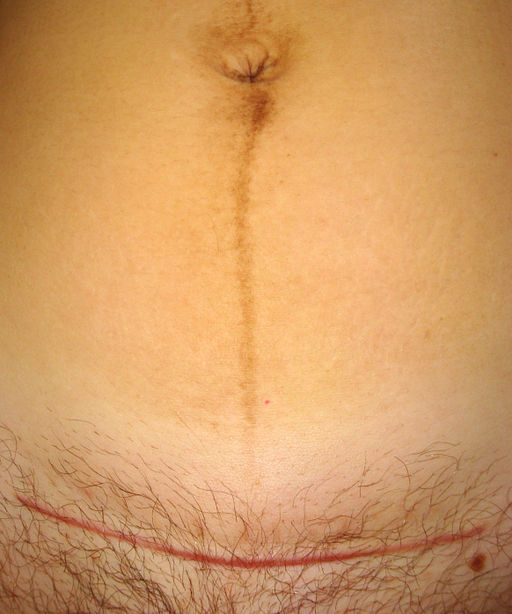
For the scar:

  • After the stitches have dissolved and the wound is fully closed, healthy high-quality oil such as rosehip seed oil (Rosa masquetta) on the incision site as often as possible to nourish the skin and decrease scarring. Combine with an essential oil blend to decrease itching, scarring, incidence of thick scarring and to speed healing (eg Blaine Andrusek Scar-B-Gone). If you don’t have these, vitamin-E oil will do.
  • From 6 weeks on, Castor Oil packs over the incision to help with healing. Soak a cotton cloth in castor oil. Put cloth against skin, cover with plastic bag or saran wrap (to protect bedding or clothing), then apply hot water bottle. Leave on for 20-40 minutes daily or until you intuitively feel you’ve had enough. If the cloth is still clean it can be folded away in the plastic and reused. Once the cloth appears to have absorbed toxins use another one. This treatment can be done for as long as you wish – weeks or months.

To Counter the Antibiotics:

While antibiotics can prevent or treat infection, they also lead to an imbalance in normal flora by killing the good bacteria in our gut. Balance can be restored by ingesting unpasteurized, fermented foods (e.g. kombucha tea, kimchi, sauerkraut) or probiotics such as acidophilus powder or caps – high quality only.  That’s the ones found in the fridge at health stores or your holistic care providers office.

  • 1-3 caps or ¼ tsp daily for 3-4 weeks – read the label for instructions. This decreases Candida albicans overgrowth, which in turn protects the digestive system from pathogens and boosts immunity. It protects you from diarrhea, vaginal yeast infections, and painful nipples commonly associated with antibiotics, and will protect the baby from thrush (mouth sores/diaper rash).
  • If you or baby show signs of such side effects, then double the dose until 2 weeks after symptoms disappear, then go back to the regular dose. Make a little paste to apply to nipples or pinkie-finger at feeding time to dose your baby.

Nutrition:

  • Eat whole, healthy foods and lots of them.
  • Continue your high-quality prenatal vitamin for the duration of breastfeeding or 8 weeks, whichever is later.
  • High quality, easily assimilated iron supplement such as Floradix or placenta capsules. You’ll take less of this type of iron, absorb more overall, and avoid constipation associated with most iron supplements. Helps after blood-loss associated with surgery. (Average blood loss is up to 1L of blood after a Caesarean birth, compared with 300-500 ml with vaginal birth.)
  • Eat well and drink lots of water. Continue drinking your raspberry leaf and nettle tea, optimally 3 cups daily, for at least a month. See herb tea recipe, “Essential Herbs for Pregnancy & Nursing
  • Ingest healthy absorbable protein; your body’s doing a lot of rebuilding now.

FOR BABY:

Caesarean birth can be traumatic for the baby, and it can be life-saving. Osteopathy, cranio-sacral therapy and newborn chiropractic care by someone who specializes in newborn-care is essential.

To Counter Antibiotics Side-Effects: Acidophilus powder (see above). Continue for 3-4 weeks. This will decrease Candida overgrowth, which in turn protects the digestive system, boosts immunity, protect thrush (mouth sores), diarrhea, and diaper rash commonly associated with antibiotics. Make a paste from 1/8 tsp and rub on nipples just before nursing, twice daily. Or dip a wet pinkie-finger into the powder and let baby suck it off.

If you’re into homeopathy, there are remedies that are safe and effective for baby too, in case you notice thrush, trauma, or other long term effects.

I teach a variety of Child Birth Education classes and prenatal workshops online for people all over. I have been a birth doula since 2002, and have helped over 400 clients with their births and over 1000 through prenatal classes. Learn more about my birth doula services, and contact me with any questions you may have.

Doulas and Dads

Although the information here will reassure any partner, this article intentionally addresses dads-to-be. All the quotes, links and videos are made by dads for dads-to-be, about their most common concerns about birth support:  1) Value; why should we pay for a doula if I’m going to be there?  2) Why do we even need a doula; what does she have that I don’t?  3) How will I be included if a doula attends?

Angie The Doula – Complications and Congenital Issues

It’s one of the worst prenatal scenarios parent-to-be may have to face – being told their baby will have complications or congenital issues (a disease or physical abnormality present from birth). Complications can range from a variation of normal (e.g. a shortened digit) to one that’s moderate but can be managed with medical care (e.g. club-foot, cleft lip/palate) to something that can range from mild to having the potential to completely change a family’s life (e.g. Down’s syndrome, spina bifida). 

This article addresses some considerations for families that are expecting a baby with complications.

How severe will the Complications and Congenital Issues be?

With the testing and ultrasound schedule commonly recommended during pregnancy, surprises are uncommon. In most cases of complications, people are made aware before the baby is born.  

Until the baby is born, it’s impossible to know for sure what the severity will be. It’s important to maintain hope and a connection with your baby. Dr. Sarah Buckley writes extensively on prenatal screening, which includes false positives (a screening or test result showing an issue when there isn’t one). In that case, a suspected problem is found to be non-existant or milder than expected. 

I’ve seen several of my clients go through this terrible roller-coaster, waiting for news, expecting the worst, and then finding everything is normal on the next ultrasounds and at the birth. It’s hard for them to ever believe their baby is OK. When parents-to-be are in limbo like this, it can lessen their attachment with their unborn baby, even after further testing confirms all is well. 

Photo by Topato at Flickr. This file is licensed under the Creative Commons Attribution 2.0 Generic license.

What do I need to be aware of?

As you learn about a condition, the list of risk factors can leave parents – especially the pregnant parent – feeling like they are to blame. Find a counsellor or other parents in the same situation to help you work through these feelings. In most cases, no one did or didn’t do anything that lead to the issue.

Another sad reality about having a baby with complications is that it can be very hard on the parents’ relationship. Those families have a increased rate of divorce or splitting up. Knowing that ahead of time can allow you to find resources, strategies and counsellors to help. 

Keep in mind:

  • You can have a smart, beautiful, amazing baby that happens to have a congenital complication.
  • Many humans far surpass the limits put on them by stats and well-meaning medical care providers. Don’t limit your child! Their environment and how they’re treated can really make a difference in how their potential plays out. (Of course, that’s true for most children.)
  • Focus on your child’s strengths while also being aware of their circumstances.
  • There are countless people living normal productive lives and accomplishing great things in spite of being told they’d never be able to do…
  • Healing and thriving happens in the community. Humans are not meant to fly solo. Find your supports.
  • Almost all parents struggle with worry, exhaustion, uncertainty, feel the pain of their child when they’re unwell, are learning to navigate life with a baby, love their baby and will do anything for them, have hopes and dreams for their child. This is common to parenting no matter if your baby is healthy or not.

To Prepare:

  • Seek out support groups – in person or online. Social media can be a bit of a minefield and provides a much different experience than a setting where you connect with actual humans. It can be scary, especially for introverts, to join a group but most people are glad they did so.  
  • Find an excellent online resource or two – not 10!
    • Good sites will describe the condition in clear, understandable and kind terms.
    • Those sites will have a section directed at parents.
    • Links to articles and resources that resonate with you.
  • Look at images online before your baby’s born, only from those vetted sites, so you’ll know what to expect.
  • Find out what the policy and practises are at your birth-place regarding family bonding and skin-to-skin contact in case of known complications, and yours specifically.
  • Learn about local resources from your medical community. Many places have an excellent team of social workers, occupational therapists, medical people, therapists, geneticists that can help you navigate.
  • Find out about social and government resources. You may be eligible for grants, programs, respite plans, and all manner of assistance available for families that have extra challenges related to a child with complications. Sometimes they’re hard to find.
  • Learn as much as you can about the complication:
    • Best and worst-case scenario / mild to severe case
    • Learn the language – technical terms, acceptable language
    • What future treatments might your child need? When? Is treatment invasive or painful? Is it necessary?
    • You have choices!  What does the future hold for your child with or without treatment or by taking a different approach?  

How can I manage my Baby’s health?

You will be your child’s best advocate and may have to become somewhat expert in their condition. Keep a binder or digital folder of every test-result, procedure, appointment. Also, have a section for resources. Do not assume every medical care provider you meet knows the full picture of the specifics of your child. 

If necessary and if you’re able, look outside of your own geographical region for treatment options.

What words and terms should I use?

The way people talk about your baby can be unknowingly hurtful. It helps everyone if you address this with those close to you. Many people want to be helpful or at least respectful but don’t know how. They tend to either stay away or blunder through, possibly adding stress or misery to your situation. 

Here are some suggestions you can share:

  • Use language that puts the human first e.g. baby with Down’s Syndrome
  • “Birth defect” is inappropriate. Terms that might feel better: Complication, congenital disability, variation of normal, congenital abnormality. 
  • A list of acceptable terms in general and for specific issues:  https://www.ncbi.nlm.nih.gov/books/NBK64884/ 

Prepare a cheat-sheet for loved ones and those that will be in your child’s life.

  1. Unacceptable terms.
  2. Acceptable terms.
  3. What makes the condition better and worse.
  4. Special treatment the child may need e.g. can’t digest a certain food, needs a special baby-carrier.
  5. What can they do that’s normal? e.g holding the baby won’t hurt them.
  6. What you need – how can they help? How can they normalize life?
  7. Welcome them to visit or participate in your child’s life.
  8. Links with more information.
  9. Success stories, anecdotes.

Online Resources:

Cochrane Review – https://www.cochrane.org/ the gold standard for reviewing and analysing medical research 
Stanford Medicine https://med.stanford.edu/ 
Johns Hopkins Medicine https://www.hopkinsmedicine.org 
Mayo Clinic https://www.mayoclinic.org/ 
Health Link British Columbia https://www.healthlinkbc.ca/ 
March of Dimes:  https://www.marchofdimes.org/complications/ (trigger alert: great info but some harsh language)

I teach a variety of Child Birth Education classes and prenatal workshops online for people all over.  I have been a birth doula since 2002, and have helped over 300 clients with their births and over 1000 through prenatal classes. Learn more about my birth doula services, and contact me with any questions you may have.

Birth Doula FAQs

What’s a doula?

A doula is a trained professional who is part of the birth care team. Birth Doulas provide continuous physical, emotional and informational support to their clients through pregnancy, birth & early postpartum. In much of the world today and throughout history, women support women through labour and birth.

What are your qualifications?

I am a Master Doula, highly educated and experienced in birth work. Please see my About page, which includes my professional background and creds. In a nutshell, I’ve attended over 400 births, taught prenatal classes to  thousands of expectant parents, trained hundreds of doulas, and processed hundreds of placentas. My education includes an Honours Science degree, Master Herbalist degree, and many other programs and certifications.

What’s the difference between a midwife and a doula?

Doulas work as part of a team with doctors or midwives, but not instead of. They provide non-medical support and comfort measures (e.g. encouragement, massage, positioning suggestions). They do not perform clinical tasks such as heart rate, blood pressure, or internal exams.

Midwives are medical providers, highly trained in the medical aspects of normal birth. For homebirths, they carry oxygen, medicines, resuscitation equipment and other gear. They are primary medical care providers at home and hospital birth. In North America primary/medical birth care is offered by either a midwife or a physician.

Why choose a doula over simply using a friend or family member as support?

Doulas are trained and experienced in childbirth support. They know the sounds and behaviors of laboring women, and what that may indicate about progress. Doulas are trained in pain-reducing comfort measures, natural methods to keep labor progressing, and to support the laboring people and partners / birth companions. There’s a significant difference in outcomes when trained doulas attend birth – more on that below.

Experienced doulas are familiar with local hospital policies & practices and have often built a rapport with the doctors, nurses and midwives. Personally, I know my way around the hospitals in which I  work, and where to find things such as extra blankets, food outlets, squat bars, parking, quiet spaces.

In most Canadian hospitals, maternal patients are allowed 2 support persons – usually that’s a partner and a support person. Some hospitals accommodate a 3rd support person. Homebirths and birth centers encourage women to have all the support they wish.

What difference does the presence of a trained doula have on birth outcomes?

The presence of a doula tends to result in shorter labours with fewer complications, less pain, and lower rates of interventions. When a doula is present during and after childbirth, women report greater satisfaction with their birth experience, make more positive assessments of their babies, have fewer caesareans and requests for medical intervention, and less postpartum depression. In case of unplanned circumstances, doula support helps reduce negative feelings about one’s childbirth experience. Studies have shown that babies born with doulas present tend to have shorter hospital stays with fewer admissions to special care nurseries, breastfeed more easily and have more affectionate mothers in the postpartum period.

Analysis of six randomized trials demonstrates that lack of doula presence correlates with:

  • Double the overall caesarean rate
  • 33% increase in length of labour
  • 67% increase in oxytocin use
  • 2 ½ times more requests for epidurals

Will a doula make my partner feel unnecessary?

A responsible doula compliments and enhances the father/parent-to-be, partner, birth-companions in their supportive role rather than acting as a replacement. (While I respect people’s individual circumstances, I will use father and male words for most of this paragraph, as that’s who most often asks this question. It comes up so often that I wrote an article just for Dads and Doulas.) The presence of a doula allows the father to support his partner emotionally during labor & birth without the pressure to remember everything he learned in childbirth class! The father typically has little-to-no actual experience with the birth process, yet is expected to act as a “coach”. Some partners feel (accurately) that this is a huge expectation. Many fathers experience the birth as an emotional journey of their own and find it hard to be objective. A doula is supportive to both the birthing person and their partner, and plays a crucial role in helping a partner become involved in the birth to the extent they feel comfortable. Studies have shown that male partners participate more actively during labor with the presence of a doula. There is significantly more eye contact and more touch between the couple.

When a couple works well together during the birth process they’re better able to handle the challenges of early parenthood. An incredible bond can form or be made stronger.

How does a doula assist with communication in hospitals during labor & birth?

Doulas do not speak on a client’s behalf nor intervene in their clinical care. They do not make decisions for clients, nor judge the decisions clients’ make, but are there to support those decisions. A doula may remind or encourage their client to ask the questions necessary to understand a procedure and make informed decisions.

During prenatal meetings, I learn what’s important to my clients, discuss how to make informed decisions, and how to communicate their specific preferences with their medical care providers. (My prenatal classes also cover the important topic of informed choices.) I help my clients create a birth plan that builds bridges of communication with the staff, meaning less need to verbally communicate every wish to every new staff member who comes in the room. My educational background includes some medical training. While I don’t work as a medical care provider, this experience allows me to be a great translator and explainer, turning fancy words into everyday language that my clients can understand.

Partners and birth companions are an important part of decision-making. Part of our birth prep includes teaching them how to navigate these conversations and how to be supportive of their labouring partner’s wishes.

When recommendations are made regarding medical care, then I am comfortable being in the conversation with the medical team, discussing options and asking questions that help my clients make their best choice. It is the responsibility of the labouring woman to consent to or decline interventions.

How does the doula fit in with nursing staff?

Doulas do not replace nurses or other medical staff, but rather work as part of the team. Doulas provide comfort and support while nursing staff take care of medical needs and charting (often in a supportive manner of course). Nurses change shifts; doulas stay.

I’ve had many wonderful experiences working with nurses to help my clients have a satisfying and empowered birth. After all, we all want the same thing and have different – often complimentary – tools to help make it happen.

How do meetings work? When, where, how do we meet?

After we’ve had an intro meeting and agreed to work together, we’ll meet at least twice more before the birth; as many times as we need to feel prepared. I do not charge extra for additional meetings. I use easy,  convenient online booking. We can meet online, at my office, or at your local home/place of choice.

It’s never too early in pregnancy to start our meetings. I ask that the two main meetings are complete by 35 weeks, ideally. After your baby is born there will be a minimum of one postpartum visit, and more if needed or desired. I welcome questions and communication from my clients between prenatal meetings and through the first eight weeks postpartum. (I am happy to receive photos and updates beyond that!)

Are doulas only useful if planning an unmedicated birth?

The role of the doula is to help attain a safe and pleasant birth, not to choose the type of birth. The presence of a doula is beneficial no matter what type of birth is planned. In fact, people who choose a medicated birth need as much support as those who choose a natural birth, but a different kind of support. For women who know they want a medicated birth, doulas still provides emotional support, informational support and comfort measures to help through labor and the administration of medications. Doulas can help  with possible side affects and by filling in the gap that medication may not cover; rarely does medication take all discomfort away and sometimes there’s a wait involved.

For a people who are facing a caesarean birth, a doula provides comfort, support and encouragement. Often a caesarean is an unexpected situation and parents-to-be can be left feeling unprepared, disappointed and lonely.

When medical interventions are part of birth, I help my clients make informed choices, navigate the resulting detours, find comfort and positions that work around monitors and tubes, and feel more empowered in their circumstances. Some people know ahead of time that interventions will be part of their birth and in that case, we can plan ahead.

What if I planned a drug-free birth then change my mind during labour?

Doulas don’t make decisions for clients or intervene in clinical care, nor do they judge their choices. They provide informational & emotional support while respecting their client’s decisions.

One of the things my clients and I discuss in prenatal meetings is this very situation. What’s the plan if they want a natural birth and then ask for pain meds? What can we do instead, if they want that option? We discuss strategies for comfort, the idea of “compassionate use of epidurals”, how the timing of epidurals can affect birth, how interventions can change the birth experience and how pain meds can be a useful tool.

We know how to handle this situation in labour because we are prepared. My clients can be in control of using pain meds or not, and can feel good about their decisions.

What kind of comfort measures do you use during the labour & birth process?

While there are common comfort measures taught in doula training courses, each doula also brings their own tools and methods. Mine include the following:

  • Positioning suggestions specific for stages of labour, circumstances, client preferences, situations that arise through the birth process. Many of these positions help keep birth moving along efficiently.
  • Massage, pressure, and various touch methods.
  • Homeopathy & Bach Flowers (optional; no extra charge).
  • Aromatherapy (optional, you provide the oils; only available out of hospital due to scent policies).
  • Words: Encouragement, reassurance, what to expect, normalizing the normal things, info to prepare for the unexpected things.
  • Setting up the birth space to be as functional and comfortable as possible.
  • Heat or cold as desired.
  • Hydrotherapy (water for comfort in labour, and/or water-birth).
  • Create space for partner, and recommendations to help partner to offer support.
  • A calm, reassuring presence who trusts the birth process.
  • Quietly holding space when that’s all that’s required.
  • For partners, reminding them to take bio-breaks and meet their own needs, answering their questions, ensuring they know what to expect at various stages and with a variety of circumstances, helping them to be the supportive partner or take breaks when needed.

Everything in the above list is optional. I am happy to respect people’s boundaries. Part of birth planning and getting to know my clients includes determining how comfort looks at various stages and what their general preferences are. When working with couples, we discuss how they’d like to work together and if the partner has any special needs or requests through birth.

My comfort tools and methods are tailored to what my clients need and want in the moment. Birth support often varies with the ebbs and flow of labour.

When do we call you in labour?

Details are discussed in our prenatal meetings. My clients know when and how to reach me. Labour support includes questions and updates, ideas and suggestions by phone or text even before we are together in the same room.

When and where do you join us in labour?

That depends on the labouring person, partner, and what’s going on in labour. Labour support includes questions and updates, ideas and suggestions by phone or text even before we are together in the same room. Early support often takes the form of checking in by phone/text, and/or dropping by your place. I join you at your home (or local labour spot), hospital or birth center once you need in-person support, which is typically in the active stages of labour. I’m usually with my clients until 2-3 hours after the birth.

How do shared-care and back-up doulas work?

Doulas often team up to provide enhanced service through busy times, holiday seasons, summertime. Clients benefit from combined experience, education, and availability. Since doulas are on call for up to a month for each client, shared care allows them time for important life events and days off without having to turn clients away or rely on unfamiliar back-up. In cases of unusually long labours, a doula-colleague may be called in to provide a break for the primary doula. Fees remain the same.

When I work with clients, I plan to attend their birth. If I know I’ll be unavailable for part of my clients’ on-call time, then I’ll offer them to meet my colleague prenatally. I am extremely choosy in my doula team.

What if you can’t be at the birth?

When I work with clients, I plan to attend their birth. In the rare circumstance that I can’t be there, you will be well supported. I am extremely choosy in my doula team, reliable back-up doulas who offer excellent care. Fees remain the same. If a back-up is likely to be part of your care, then a meeting with my doula-colleague can be arranged.

What kind of postpartum support do you offer?

Doulas usually stay for 2-3 hours after the birth, until new or new-again parents are ready to be on their  own with their baby. I visit my clients on the first day postpartum, in-person if they’re in our local area, and virtually if they’re farther away. Postpartum visits are typically 45-60 minutes and can be a little longer if needed.

Then I follow them for 8 weeks postpartum, offering basic breastfeeding support, answering questions, and reviewing their birth. Additional visits are available at no charge if desired. During this time I share important info such as what’s normal and what requires medical attention for mother and baby, typical newborn behaviour, mental health information, how to navigate life as a new or newly expanded family. I am available for questions, to share educational resources, and referrals such as lactation consultants, pelvic floor physios, tongue-tie experts, and skilled practitioners for newborn and maternal postpartum recovery.

What if I need extra help with breastfeeding or baby-care?

The information above describes the care I provide as a birth doula. Another kind of doula, a “postpartum doula”, specializes in extended care and breastfeeding support. They typically offer 3-6 hour sessions in your home, light house tidying, and some offer overnight care. I train postpartum doulas and can make recommendations.

There are also breastfeeding counselors and lactation consultants that can be arranged through public health or hired privately. I can provide resources and contact info for them. If you’re in hospital then the nurses or unit Lactation Consultants can provide support until you’re discharged.

How much do your services cost? 

There are many ways to work with me as a prenatal educator and a doula. I teach a variety of classes and offer a few different birth doula packages. Please see my Fees page.

More Info & Next Steps

Placenta Capsules FAQs

What qualifies you to provide this service?
Proper training and a lot of experience:  We’ve offered this service since 2009 and between us have done 500+ placentas, making us the most experienced encapsulators in Saskatchewan. We are both OSHA certified and trained in Universal Precautions, food science and preservation. We train placenta encapsulators through Birth Ways International.

How long does it take?  The capsules are ready in 1-2 days from when we get the placenta.

How many capsules will I get?
That depends on the size of your placenta. The only thing that goes into the capsules is the placenta, i.e. no fillers to create a specific number of caps. Most placentas make at least 100 caps, with the average producing around 115. Bigger placentas can fill close to 140 capsules.

What’s the difference between gel and veg caps?
Gel caps are made from animal gelatin and veg caps are vegan, made from plant materials. See a detailed ingredients list for our high quality capsules.

How do you clean and care for your equipment?
The processing is done using OSHA Blood Borne Pathogen Standards. All surfaces and equipment are cleaned, then disinfected, then twice-sterilized using chemical methods. (This is “over-kill” but is reassuring to us and our clients!) We use high quality equipment that can be properly sterilized and is kept in like-new working order.

Can I keep my placenta if I have a caesarean birth?
Yes. The steps are exactly the same. Simply ensure your O.R. nurse knows you wish to keep it.

Am I “allowed” to keep my placenta? Do I need permission from my doctor?
You don’t need permission from anyone. It’s yours to keep. Simply write in your birth plan or tell your care-provider, “I’m keeping my placenta.” Other details are for you to share or not, as you choose. You will be asked  to sign their Release of Live Tissue waiver. Remind the people attending your birth that you wish to keep it. Obstetrical staff in most areas, including at Regina General Hospital and nearby rural hospitals, are quite used to their patients keeping their placenta.

Can you make capsules from my placenta if I choose to use epidural or other medications in labour?  Yes.

Is my placenta safe to encapsulate if there’s meconium (baby poops inside) during the birth?
Yes. The initial cleaning process and proper dehydration takes care of this.

Are there any cases where my placenta can’t be encapsulated?
In the rare case of uterine or placental infection during labour, your placenta will be taken away to the Pathology department for analysis. We’ve processed well over 500 placentas and have never received one that appeared to be infected. All placentas are inspected by midwives/doctors, who do not send infected placentas (or anything else) home with patients. Basically if your placenta is not being sent to Pathology, then there’s generally not a concern about infection.

If your placenta is left at room temperature for too long then we are unable to process it. It should be treated like raw meat and be refrigerated or put on ice shortly after birth – certainly within a couple of hours but sooner is ideal. If it won’t be processed within 3 days then it should go into a freezer.

Do you serve out-of-town clients?
Yes. We have systems in place to make this easy for you. We provide detailed, easy-to-follow instructions.

How do I package the placenta for you?
At Regina General Hospital, the placenta is usually put into a square plastic container; you can use that for storage and transport. We provide detailed instructions to bring your own container as a back-up. You can ask your nurse to get it ready. While it’s not their “job” per se, most are happy to help. At home births or other hospitals you’ll need to provide your own container (we provide detailed instructions). If you have your baby at night or are shipping the placenta, then you’ll keep it cold (detailed instructions provided) until the morning when it’s picked up.

How do I get the placenta to you?
One of us picks it up at Regina General Hospital or at your home (or any location) within Regina city limits. If you have your baby out of town then you can have it delivered to us. We provide detailed instructions.

How do you ensure the capsules are returned to the right person?
This is one of the most important parts of the process! One of several advantages to working in partnership is that we can process two placentas at the same time in two separate locations. We have a triple labeling system in place to ensure 100% accuracy; your placenta is attached to a label at every stage of processing, from placenta pick-up through to delivery of capsules. This system is a matter of routine, and is followed with every client’s placenta, even though we rarely have 2 placentas in the same building at the same time.

How do I get the capsules back?
We deliver the capsules anywhere within Regina city limits. If you live out of town then we can ship them or send them with someone going your way (we can drop the package off anywhere in Regina to that person).

How long do the capsules last?
They’re best used within 1 year, stored at room temperature in an airtight container (glass jar). After that they don’t necessarily go “bad”, but the nutrients start to diminish. If you wish to keep them longer, then the freezer can extend that for up to another year if they go in within the first few months. (We don’t recommend this because we hear from so many women who put them in the freezer and promptly forgot about them.)

How do I store the capsules?
Just keep them in the glass jar.  There’s no need to refrigerate them.  They’re good for up to a year at room temperature in a cupboard.  If you wish to keep them longer, then store in a deep-freeze for up to two years.

Can you make capsules out of my frozen placenta?  Yes.

How do we proceed? 
Please follow the steps on our encapsulation page. There’s a form for you to complete and all the information you need is there too. We need your estimated “due date” and contact info. Cash is our preferred form of payment but we also accept e-transfers.

What if I Haven’t Made Arrangements Yet?  We can usually accommodate last minute request and have provided this service in response to several texts such as, “I just had my baby and want my placenta done!” In an ideal world everything will be set up ahead of time. However if you just decided to do this while you’re in labour – or even after your birth – and need to make quick arrangements, please TEXT during normal “awake” hours. (If you have your baby after 9am or before 8am, please put your placenta in fridge or on ice and get in touch in the morning.) Please follow the steps on our encapsulation page.

Do you buy or sell placentas, or placenta products?
We do not! This is not only unethical and unsafe, but is illegal in Canada. (If anyone offers to do this, please report them to the Public Health Department.) We provide the service of turning your own placenta into capsules for your own use.

Avoiding Post-Dates Pregnancy

Post-term or post-date pregnancy is one that exceeds 40-42 weeks gestation, depending where you live. If a pregnant woman is healthy and well nourished then her placenta is likely to thrive and nourish the baby at any gestation. If there are signs that mother or baby will be healthier with baby Earth-side, then induction is warranted; otherwise it’s a way overused intervention that often leads to the Cascade of Intervention.    

Being Weighed in Pregnancy

Weight gain is one method to measure pregnancy health. It’s not the only way. Like everything else, being weighed is optional. You can set boundaries around being weighed or decline altogether.  

For many women, weigh-ins are a source of anxiety, regardless of their size. Society is filled with preconceived ideas about weight and a lot of people have past trauma or shame related to the number on the scale. That can stem from negative body image issues, being stigmatized due to weight, a history of disordered eating or body dysmorphia. For vulnerable people, the act of being weighed and hearing the number can significantly set back their recovery or treatment. 

I recommend speaking with your medical care provider about being weighed and employing shared decision making. Ask if it’s a routine part of care or if there’s a specific medical reason. If the “medical reason” is pregnancy, you could ask for more specific reasons. Use that information to decide if you agree to do weigh-ins at every appointment, do them differently than the usual, or skip them.  

Here are some tips for navigating weigh-ins:

  1. Share Concerns: Talk to your medical care provider about any anxieties or discomfort you may have regarding weighing. Ask questions and decide what’s best for you. 
  1. Say No Thank You: Remember, being weighed is always optional, including during pregnancy. It’s okay to decline if you’re not comfortable.
  1. Less Frequent Weigh-Ins: If frequent weigh-ins are causing stress, discuss a modified schedule of being weighed less frequently than at each appointment.
  1. Learn Total Weight Gained Only: For some people, it’s the total number that concerns them more than their pregnancy related change in weight. Request to learn the total amount of weight gained and not be told your current weight. 
  1. Do It at Home: If you prefer, you can weigh yourself at home and report the results at your prenatal appointments.
  1. Stand on Scale Backwards: If seeing the number causes stress, ask to face away from the display during the weigh-in. Be clear that you do not want to be told the number. (You may also ask for the weight to be blocked out on your copy of your prenatal records, if you are worried about accidentally or intentionally seeing it.)
  1. Tell Staff to Not Say It Out Loud: This prevents you and others from learning your weight, and maintains your privacy.
  1. Ask for Privacy: If the scale is in a public area, request to be weighed in a private space if that makes you more comfortable. You can also incorporate any of the above strategies. (Yes, one of my clients just told me her doctor’s office has the scale in the waiting room!)
  1. Change medical care providers: Hopefully you can come to an agreement that feels good to you. If you are not treated respectfully, then changing to another medical practice is usually an option. 

Your health journey is personal and deserves individualized support. This is one of many choices you can make through your pregnancy journey. Although such conversations can be difficult, it’s important to advocate for your comfort and well-being every step of the way. 

Choices in Planned Caesarean Births

One of the benefits of a planned caesarean is that there’s time to consider options, ask questions and make choices beforehand. 

Many hospitals are willing to take extra steps to make a caesarean birth more gentle and family friendly. The following is a list of practises that are being requested as part of a “Gentle Caesarean”. Yes I’m aware that the very nature of a caesarean and the postpartum recovery do not seem gentle to most people. However I appreciate that there are medical staff working hard to make the experience as positive, healthy and family-friendly as possible.  

  • Watching your baby being born. Clear surgical drapes, surgical drapes with a panel that can be lowered to reveal a clear panel, or having the drapes lowered entirely.
  • Cord cutting. Most hospitals don’t allow anyone other than staff to cut the cord in the surgical field. But they can leave a longer cord and have the partner trim it – like a ceremonial cutting of the cord – at the baby warmer.
  • Skin-to-skin contact with the birthing parent, from the chest up.
  • Maternal heart monitors on their side or back, leaving the chest available for holding baby skin-to-skin.
  • Music of your choice – played on the sound system or your headphones.
  • Support through the entire procedure, from the moment of entering the O.R. until heading to the recovery room. Most hospitals allow one support person in the O.R. and recovery room. Some allow doulas to come in as well. 
  • Healthy baby stays with the parent(s); family stays together in O.R. and recovery room. (In some hospitals, healthy babies born by caesarean are automatically taken to NICU or a medical nursery for observation. This has to stop! In that case, the non-birthing parent, partner or companion can accompany baby.)
  • Photos / videos – always bring your device. There’s often a nurse who is waiting for the baby to be born and will take some photos of the birth, the first time parents hold the baby, etc. There are many beautiful moments to celebrate at any birth, including caesareans.
  • Flora for the baby – vaginal seeding. You might ask for a GBS test a week before the surgery before going ahead with this. Note that this is still new enough that most medical staff will not participate. Plan to DIY.
  • Any cultural / spiritual aspects you might wish to include. I’ve seen an obstetrician lead a prayer before starting the surgery and have joined the surgical team in singing happy birthday to a newborn. Some people bring in a little card or symbol or small talisman.
  • Obstetrician of your choice. Certainly a perk of scheduling your birth. 
  • Volume of monitoring machines – ask for the volume to be turned up or down if it’s reassuring for you, or not, to hear things like fetal heartbeat, maternal heart beat. 
  • Delayed cord clamping – up to 1 min is considered safe with caesareans. (I’ve heard of a hospital that keeps the placenta and baby attached after the placenta is removed – definitely not standard of care in most places. Never hurts to ask.)

In some facilities the things on this list may already be standard care. In others, requesting these things will provide an opportunity for staff to gain a new perspective. Patient safety is the primary concern. Some of these practices may be considered safe or not, possible or not, depending on patient health, the facility and/or the staff working in the O.R.

Speak with your doctor well ahead of time about the things that interest you from this list. 

If you get a sea of “no ways,” then ask why not. There could be valid reasons or it could be one unbending person. If it’s the latter then you might wish to explore working with another doctor or giving birth in a different facility, if that’s an option. 

Need help to make a birth plan that builds bridges instead of walls?

I can help you sort through your options and find the best wording. Check out my Birth Plan Prep Consultations which are available in person or on Zoom.

Optimal Fetal Position Makes Labour Shorter and Easier!

Fetal position (position of the baby in the maternal pelvis) at the onset of labour is one of the greatest determining factors of how the birth process will proceed.  The optimal fetal position is pictured below.  A good way to remember the best position is that if you can give your baby a back rub every time through your belly, then they are likely in a good position.

There’s lots you can do to affect the baby’s position. Read on!

The terms “posterior” or “sunny-side up” describe a baby who faces out, or is spine-to-spine with the pregnant woman. “OP” is the medical jargon, meaning occiput posterior. The part of the head that enters the pelvis is bigger in this position and the baby doesn’t flex and rotate as well as if they’re in the optimal position.  That can make for a much longer, more painful and more complicated birth.

Problems Related to Posterior Position

  • More difficult for baby to drop into and through the pelvis
  • Pregnancy may last longer
  • Membranes are more likely to rupture before the onset of labour
  • Labour may progress slowly or not at all
  • Back-labour – back-pain during labour that doesn’t disappear between contractions
  • Increased risk of tearing
  • Increased risk of instrumental (vacuum or forceps) or Caesarean birth
  • Increased stress on baby’s head and nervous system

Some women birth a posterior baby just fine.  Those include but are not limited to, women who’ve given birth without difficulty before, those with an average or smaller baby, a labouring woman who’s able to move about freely and allow her baby to rotate into an “anterior” (the optimal) position.

Fetus in WombBaby in optimal position:  head down and flexed, back out.

Signs of a Posterior Baby

  • Feeling kicks or flutters at the front
  • Frequent urination (more frequent than with anterior pregnancy)
  • Belly appears flat on top or lumpy
  • Your midwife or doctor can tell by palpating your abdomen or by doing an ultrasound
  • Fetal heart-tones may be difficult to hear
  • Head is not engaged or doesn’t drop into pelvis
  • Can be assessed during labour by a cervical check

Factors Contributing to Posterior Position
Babies can assume a posterior position with no risk factors, but the following increase the chances:

  • North American lifestyle – reclining in upholstered furniture, sedentary lifestyle, sitting in cars (it’s interesting to note this position is rare in cultures where pregnant women walk a lot or work bent-over, and lack Lazy-Boy style chairs and couches)
  • Sitting with legs crossed
  • Postural or anatomical issues
  • Issue of uterine / abdominal muscles (e.g. tight psoas)
  • First pregnancy
  • Epidural use early in labour (hinders rotation and descent of baby) is correlated with more than 3x the rate of posterior position at birth (Tully, 2008)
  • Labouring in bed or without adequate movement
  • Baby who was breech and turned to vertex (head down)
  • Pregnant person with history of breech or posterior baby
  • Short or tight cord around baby
  • Emotional issues – fear of birth or parenting, not paying attention to pregnancy, family history of breech, relationship issues, financial concerns, stress (Frye, 1998)

Tricks for Turning a Posterior Baby to an Anterior Position
Sometimes there’s an unknown reason for the baby to be posterior and nothing will turn them. But in many cases a baby can be turned. Please ask for details or referrals.

  • Visualization and “talking” to your baby. Focus on letting the baby know it’s easier to get out when facing the other way.  This works especially well if combined with changing your emotional environment e.g. dealing with fears, prepping for birth.
  • Look at a picture of baby in proper position (e.g. Fig. 1), or have it drawn on your belly!
  • Webster Technique with a chiropractor certified in its use. Pistolese (2002) cites an 82% rate of success in relieving the musculoskeletal causes of intrauterine constraint.  It’s beneficial to perform the Webster Technique starting at 35-36 weeks.
  • Sit with pelvis tilted forward – knees below pelvis with straight back. Instead of upholstered furniture, use a birth ball, the floor, a kneeling chair or a regular hard chair or stool
  • Hands and knees – read, crawl around, or do “child’s pose” modified for pregnant belly
  • Pelvic rocking while on all 4’s – gentle “cats and dogs” yoga postures – several times daily
  • Swimming or floating – anything with belly down like a hammock for baby to drop into
  • Movement and exercise
  • Sleep on left side with a body pillow – left leg straight, right leg bent on pillow
  • Homeopathic Pulsatilla 200CH, 1 dose every 3 days.
  • Acupuncture or moxibustion – see a Traditional Doctor of Chinese Medicine or an acupuncturist who specializes in women’s and pregnancy care.
  • Deal with fears around childbirth and parenting
  • Postural management – check out spinningbabies.com for some excellent postures and exercises that encourage babies to assume optimal positions for birth.
  • Exercises to prepare for birth and encourage pelvic floor health, and optimal fetal positioning, such as the Miles Circuit.

Birth Trauma – Practical Tips for Preventing Trauma and Giving Birth After Trauma

There is a relationship between birth and trauma. Some people are traumatized through their birth experience while others begin the birth process in a traumatized state. Past trauma can have a significant impact in the birth room, including presenting additional challenges and the possibility of being retraumatized. This article presents practical tips for being more empowered and minimizing trauma during pregnancy and birth. 

Before we go further, I would like to acknowledge there are many obstetrical care workers who treat their patients respectfully and kindly while doing the important work of providing medical care. They are aware of the vulnerability of birthing families and treat them in a way that leaves them feeling safe, happy and whole. However, that is not the case everywhere or with everyone; there’s still work to do.

For most people birth in and of itself is not traumatic. In most cases, trauma stems from how they were treated through their birth. There are too many birth stories that include coercion, disrespect, disempowerment, fears that aren’t addressed, being left alone, feeling unsafe and unsupported, and lack of choices. Birthing people don’t know what their options are and therefore they have none. They don’t know how to prepare and what to do. They are told what’s going to be done to them rather than being part of the decision making process. Many women report feeling like they were stuck on a runaway train.

Women need to feel safe while giving birth. In fact, birth is shorter, more comfortable, and usually uncomplicated when that’s the case. There are things we can do to decrease or negate the impact of some common practices in the North American medical model of birth that may lead to feelings of vulnerability or trauma. In many cases it’s just how things are done and set-up. 

Globally, 1 in 3 women have been subjected to physical and/or sexual violence. Every birthing person should be treated as a survivor but that is not the case yet. Fortunately in some hospitals, including ours, staff have special training in this area and provide extra respectful, sensitive and compassionate care to survivors.

Practises that may add to trauma in some people include…

  • Being exposed, naked, uncovered in front of others.
  • People who are fully clothed (and highly educated or seemingly “in charge”) standing over someone who is partially or wholly undressed, usually on their back, and possibly with their legs open, in a vulnerable state.
  • Being touched, especially from behind, without consent or even being told first. 
  • Language such as “good girl” and “honey” and “dear”.
  • Cervical checks in general. Exasperated by being told, “I’m going to check your cervix now,” without a conversion to explain reasons, options, and waiting for consent. Painful cervical checks. Staff not stopping when being told “No!” or “Stop!” or any of the many other ways women say no or stop. 
  • Being put into positions, often presented as, “You have to…”. Lack of choice.
  • Not being “allowed” to move freely.
  • Legs being held or put into leg rests / stirrups
  • “Put on this gown.” Being told what to wear, especially when that garment does not offer full coverage and is open in the back.
  • A room set up that results in “private parts” facing the door.
  • Technical language used in medical settings can be confusing and scary for some people.
  • Epidurals and the numbness that may result.
  • Not having timely access to pain medications, including epidurals.
  • Language related to failure or “not doing it right”, e.g. lack of progress, making too much noise, breathing wrong, being too stiff, reacting too much to pain, stop crying.
  • Lack of choice in birthplace and/or medical care provider.

Things you can consider doing to feel more in control, more empowered, and lessen the chances of being traumatized:

  • Expect excellent and compassionate care but be prepared in case not everyone you meet feels that way to you.
  • Remember you have the same rights in the birth room as you do in the coffee shop or anywhere else! No one is allowed to touch you or do anything without your consent. You have the right to say “yes”, “no”, “wait”, “stop” to any test and intervention. 
  • Be an active participant in your care. Consider your care providers as part of your team. 
  • Ask enough questions to make informed choices.
  • Pause. Normally things don’t have to happen right away. Ask your questions, gather your wits, get grounded and then proceed.  
  • Bring a companion who can help you find your voice and help advocate for you. Doulas play an important role in this. 
  • Ask for a few minutes alone or with your support person(s) before making decisions. You might regroup, realize you have more questions, find the strength or means to say no to something you don’t want, or yes to something you don’t want but feels like the best choice. 
  • Maintain control over cervical checks and other procedures that might feel invasive. Don’t proceed until the care provider has an understanding of how to help you feel as safe as possible.  
  • Share that you are coming into this experience with past trauma. No need to share details.
  • Hire a doula who is trauma-informed.
  • Say no. Use the word consent.
  • Wear clothing that feels safe and offers the level of modesty you need.
  • If you want touch comfort measures and also modesty, massage and touch can be done over a sheet or your clothing.
  • Consider how you might react to the intense sensations of birthing – pressure as the baby descends, pain and/or power of contractions, your body stretching. 
  • Tools to deal with the aforementioned sensations – meditation, hypnobirthing, comfort measures, pain medications including epidurals. Some people opt for cesarean. Discuss these options with your midwife/doctor if you are concerned. Your mental and emotional health are just as important as your obstetrical health.
  • Think about how it might feel to have an epidural that might cause legs to feel heavy or numbed. This can be a welcome relief or it might be frightening.
  • If you have a counselor or psychiatrist, have a meeting to help you prepare for birth and postpartum.
  • If it’s not possible to be covered or positioned in a way that offers privacy from the door, then a companion can hold up a sheet or stand between you and the door, acting like a visual block as people enter & exit the room.
  • Wear headphones.
  • Wear a sheet or blanket like a fort or super-hero cape.
  • All the other things that bring comfort and security during birth.
  • Stick a sign on the door if there’s a single point you wish everyone to know. It might be, “Please read my birth plan before meeting me.”
  • Consider warm compresses on the perineum during crowning if you’re on your back. This can offer warm comfort and a greater sense of privacy. On the other hand, some people would find this scary and like too much touch. 
  • Assume birthing positions other than being on your back, such as being upright, leaning forward, and hands & knees.  
  • If you normally wear glasses, consider the impact of leaving them on or off through labour. Seeing more or less detail may be helpful.

Things You Can Put on Your Birth Plan

You can create a nice Birth Preferences Document that builds bridges of communication and understanding with your medical care team. If you are a survivor or are vulnerable, then you may wish to include additional points related to trauma, which are listed below. It can be helpful to the staff if your document includes, “Due to past trauma, …..”.  You don’t have to disclose and won’t be asked to explain what that trauma was. 

  • Wait for verbal consent before touching me in any way.
  • I need to have complete control over cervical checks, including when they’re done, by whom, and the pace. I may say “yes”, “no”, “wait”, and “stop”
  • Please assume I have not consented to anything until I expressly say yes. 
  • Before we discuss options, procedures and next steps, ensure I… (options include: am fully clothed or covered, am sitting, am standing, have my partner/companion/doula nearby. Use any or all of those things in any combination). 
  • If I’m on the bed I will face the foot of the bed until the moment of birth. 
  • I will need a few minutes (alone?) to process information before making choices.
  • Please limit the team to essential staff only. No observers or students practicing on me.
  • Minimal cervical checks and only by experienced staff who will proceed only after obtaining my expressed verbal consent. 
  • Please use my name when addressing me; no terms of endearment such as honey or good-girl.
  • Please ensure I am covered as much as possible throughout my birth.
  • I would like warm compresses during crowning.
  • Hands off my bottom during crowning.
  • I would like to hear the baby heart monitor if it is being used.
  • Please silence the baby heart monitor if it is being used.

Preparing for your birth can include…

  • Getting as prepared as possible before giving birth. Learn about local practises and your options. Knowledge is power! My prenatal classes are designed with this in mind.
  • Work with a midwife or doctor with whom you feel safe and comfortable.
  • Hiring a doula. Most communities have a professional association with bios for a variety of doulas.
  • Practising saying no to things you don’t want and yes to those you want. Ask for what you want.
  • Taking steps to learn your options – prenatal classes, appointments with your medical care provider, counsellors, local birth-workers – and prepare a plan for your specific concerns.
  • Practising the things you might want to do in labour, such as a variety of positions, comfort measures, grounding practises, moving freely in clothing you wish to wear in birth.
  • A hospital tour. The fewer surprises the better.
  • Pack a birth bag that includes choices of clothing, things you can use for comfort, and even a couple of things that bring you peace.
  • Asking lots of questions along the way. Practise having discussions with your team in order to have shared decision making. When you say “no” that should be respected and when you say “yes” you’ll feel better about your decision. You will likely be pleasantly surprised.