How to Avoid Birthing on Your Back

Did you know you don’t have to lay on your back to give birth?

Even though almost no one says, “I want to lay on my back to give birth”, that’s how the majority of women in North America – probably other places too – do it. Why? Because even if they’re in a more comfortable position, they’re told, “OK it’s time to have your baby – get on your back.” 

I’ve seen many people give birth on all hands & knees, squatting, on their side or even standing. Midwives and many doctors know how to catch babies in any position. It’s just a habit for the staff to tell their patients to get on their back.

How can you avoid this uncomfortable and ineffective position?

  1. Don’t get into the position in the first place. It’s hard to get out of it once you’re there.
  2. Just say NO!!!  Or say nothing but give a good emphatic head shake.
  3. When you get bugged over and over, keep saying NO and shaking your head!!

Sounds obvious but saying NO and continuing to refuse is not that easy. Check out my video about the Tend & Befriend Stress Response that makes it so difficult to not just do what we’re told during labour.

Here are a few tips:

  1. We do the thing we’re used to when we’re in a stressful or vulnerable situation – which describes birth for many people. Practise getting on your bed on “all 4-s”. Every night, just get on your hands and knees and do a few little stretches – even 5 seconds – then lay down. It will start to feel normal to get on a bed without laying down.
  2. During labour, crawl up onto the bed and take positions that feel good for you. No one will wrestle you to your back. At least I sure hope not – if that happens, it’s assault.
  3. Ensure you have a birth companion who can advocate for you and help you find your voice and your best position.
  4. Avoid getting on your back for cervical checks when the birth is imminent, as it’s hard to get out of that position. If you know your baby is moving down well maybe there’s no need to check. Many MCP know how to check a cervix in a variety of positions.
  5. If you have an epidural and are confined to bed, there are still many positions available to you.
You don’t need to ask permission to assume positions of your choice!  However, if there’s a medical complication that requires certain interventions or positions, then it may be safest for you to give birth on your back – but those are not common.

Of course if it feels good to be on your back, then great – go for it!  It’s very uncommon but possible. In my dreamy, ideal birth world, everyone would be in the position that feels best for them.  

I’m AE, prenatal educator and doula. You can find all kinds of information about classes, pregnancy, birth and postpartum on my sites listed below.  I wish you an empowering birth. Thanks for watching.

Angie The Doula – Tips and Recipes for Labour-Aid Drinks

Here are some alternatives to store-bought sport drinks, which are usually full of chemicals and unhealthy ingredients. High quality coconut water is full of electrolytes. Any bone broth works too for Labour-Aid.

Labour-Aid and broths are excellent for hydration, energy and electrolytes.  They help keep the powerful forces of labour progressing.  Stock the ingredients at home and prepare at the first sign of labour.  Or make ahead (this is a great task for someone who wishes to help out) and freeze as cubes, popsicles, or in a bottle, to be thawed and consumed as labour progresses.

Most labouring women prefer their labour-aid chilled and their broths warm.

LABOUR-AID DRINK – basic (recipe shared by many midwives and natural birth books)
1 L  water or Pregnancy Tea
1/3 C  raw honey or real maple syrup
1/3 C  juice, fresh-squeezed from a real lemon
1/2 t  salt, preferably Celtic or Himalayan
1/4 t  baking soda
2 crushed calcium tablets

LABOUR-AID DRINK – easiest (recipe by Head to Heal Wellness)
1L water (for hydration)
1 Tbsp honey (to give us fuel while being active)
1/4 Tsp salt (to replace the loss of electrolytes)
1/4 Tsp baking soda (to replace electrolytes lost)
1/2 a lemon
Combine all the ingredients into a glass container and stir. You can tweak the amounts based on your personal preference and needs. Squeeze as much lemon as you like until you find your favourite ratio. Voila!

These next two versions are from Mommypotamus.  See the website for details of ingredients.

LABOUR-AID DRINK – Lemon Labor Aide
4 C  water
1/2 C  freshly squeezed lemon juice
1/4 t  salt, preferably Celtic or Himalayan
1/4 C  raw honey (or more to taste)
a few drops concentrated minerals (available at health stores, optional)
a few drops Rescue Remedy (optional)

LABOUR-AID DRINK – Coconut & Lime Labor Aide
3 C  coconut water
1 C  water (or more)
1/2 C  freshly squeezed lime juice
1/4 t  salt, preferably Celtic or Himalayan
2 T  raw honey or maple syrup
a few drops concentrated minerals (available at health stores, optional)
a few drops Rescue Remedy (optional)

VEGGIE BROTH
Add fresh or dried veggies (e.g. carrots, celery, onion, garlic – anything) to boiling water
Simmer for 20-30 min
Add 1 T  apple-cider vinegar
Season with any herbs or spices you like
Add salt to taste, preferably Himilayan or Celtic (kelp powder can be used instead)
Blend to smooth consistency or strain veggie chunks out

BONE BROTH
Put bones and any left-over bits, including meat on bones in pot and cover with water.
Add 1-2 T  apple cider vinegar
Bring to boil then simmer (large bones such as beef for up to 24 hours; small animal bones such as chicken only need 3-4 hours)
Strain
Add salt to taste, preferably Himilayan or Celtic (kelp powder can be used instead)
Optional:  Add dried or finely chopped fresh veggies, herbs or spices and simmer for another 30min

Angie The Doula – Postpartum Warning Signs for Mother and Baby

CALL 811/DOCTOR/MIDWIFE WITH ANY WARNING SIGNS.  CALL 911 FOR EMERGENCY HELP!

If you call 911, have someone clear a path for EMT (halls, stairs etc), turn on outside light, put pets away, unlock door, clear driveway.)

Maternal Warning Signs

  • Vaginal bleeding heavy enough to soak a super-pad front to back in 1/2hr-1hr. Note: if blood starts to pour continuously, lay down immediately and call 911;
  • Foul-smelling bleeding or discharge
  • Passing clots bigger than a toonie
  • Temperature greater than 38C (100.4F)
  • Feeling flu-like
  • Uterus is painful to the touch
  • Uterus feels soft and is at or above the navel, and doesn’t respond to gentle massage
  • Sore, red, hot, tender area on leg or calf
  • Painful, swollen, red breasts or red / hot / lumpy spots
  • Sudden and extreme pain on nipples with feeding (may be thrush)
  • Persistent dizziness (call 911 if accompanied by bleeding)
  • Fainting (call 911 if accompanied by bleeding)
  • Feeling depressed, very anxious, unhappy or are crying without reason and cannot sleep or eat

Baby Warning Signs

  • Blue or grey in the lips, face or chest. Call 911.
  • Temperature of greater than 37.4C (99.3F) or lower than 35C (96.6F) (note: consider environment – e.g. is baby wrapped in layers in a hot room?)
  • Laboured breathing
  • Extra-sleepy and has not fed in the past 6-8 hours
  • Has not urinated or passed meconium (feces) in the first 24 hours
  • Yellow skin in the first 24 hours
  • Red patches, pimples or bumps
  • Vomits after every feed
  • High pitched cry or extremely irritable, inconsolable
  • Lethargic
  • Red, hot area around cord-stump; swelling of stump; discharge of pus, blood or meconium
  • Red blood in urine (note – some girl-babies get a little ‘period’ due to hormones)
  • Bright red diaper rash
  • White spots in mouth that don’t rub off (thrush)

Angie The Doula – Warning Signs During Pregnancy and Labour

Unusual sensations and some discomforts are part of normal pregnancies.  It is important, however, that any of the signs listed below be assessed right away.

CALL 811/DOCTOR/MIDWIFE WITH ANY WARNING SIGNS.  CALL 911 FOR EMERGENCY HELP!

If you call 911, have someone clear a path for EMT (halls, stairs etc), turn on outside light, put pets away, unlock door, clear driveway.)

Warning Signs – Seek medical advise soon, at least same day. Do not sleep on any of these or wait for them to go away on their own.

  • Reduced fetal movement that doesn’t respond to stimulation (see below) *
  • Maternal fever and chills
  • Dizziness
  • Persistent and severe mid-back pain
  • Prolonged nausea and vomiting
  • Initial outbreak of lesions or blisters in the perineal area
  • Change from normal urination – suspected bladder infection
  • Vaginal discharge with itching, irritation or a foul smell
  • Signs of bladder infection such as burning or urgent, frequent urination
  • Persistent negative feelings, low moods and/or overwhelming anxiety.
  • Gush of vaginal fluid or suspect ruptured membranes, with nothing felt to be falling out
  • Pinkish, brownish, sparse or suspected vaginal bleeding
  • Signs of labour (regular uterine contractions, waters releasing) before 37 weeks
  • If there’s a colour (yellow, brown, green) or foul odour when waters release

Danger Signs – The symptoms below may indicate a life-threatening condition, and require immediate medical attention.  Get to a hospital right away.

  • Accident or injury such as car accident or a fall (seek medical attention if required)
  • Sudden severe swelling of hands and face
  • Severe continuing headache
  • Visual disturbances (e.g., blurring of vision, spots, flashes of light)
  • Persistent, severe, sudden abdominal or pelvic pain
  • Severe epigastric pain (upper abdomen) – may feel like heartburn but more severe and not relieved by the usual tricks
  • Sudden and severe vomiting
  • Red flowing vaginal bleeding (CALL 911)
  • Persistent thoughts of self-harm, suicidal urges (CALL 911)
  • Convulsions (CALL 911)
  • Gush of vaginal fluid / suspected ruptured membranes, with a cord felt at or outside vaginal opening (cord prolapse) – get on hands and knees with buttocks higher than head (CALL 911)
20200408_121420

* Normal Fetal Movement:  If you’ve been busy or are unsure about movement then relax and have a meal, a small glass of juice or some fruit.  Palpate your baby to induce movement.  Pay attention to the movements.  Babies sleep.  If your blood sugar is low then so is your baby’s.  You should feel at least 10 movements over any 2 hour block and at least 1 in the first hour.   If not then seek medical attention.

Updated RGH policies for maternal patients and what doulas can do for you

As of April 2, 2021, RGH and all Sask hospitals are now closed to visitors and are restricting support to only ONE person in the Labour & Birth Unit and the Mother-Baby Unit. Each labouring woman can have one person with her throughout her stay; the same one person, no swapping or changing. The restrictions also affect patients in pretty much every unit throughout all hospitals.

The Sask Health Authority will re-evaluate weekly and get back to 2 support persons as soon as they deem it safe to do so. My fingers and toes are crossed that this happens before your birth! If it doesn’t, doulas are still here to help you.

I have been down this road a year ago for about 2 months with several clients and can still be immensely helpful to you. Here’s what doulas can do to help you prepare for your birth during this time:

  • Extra planning and education for your birth, given this new situation.
  • Answer your questions through pregnancy, birth and postpartum. You still have someone you can call anytime.
  • Early labour support in your home, while wearing masks.
  • Help you make the decision about when to go to hospital. We can do this by phone or in person.
  • Ensure you know which door to use, where to park, what you need to go through registration and admitting.
  • Be your back-up for support in case one of you “fails screening”. 
  • Be the primary support person if wanted or needed.
  • Phone and/or video support throughout your labour and birth. This works best if you resist the urge to “be polite and let your doula sleep”. If I have updates throughout your journey, I can advise you on questions to ask, positions to try, things to do for comfort, things to do to keep labour progressing as well as possible. I can watch for “cross roads” and help you towards what is your version of an ideal birth. I can still help you navigate detours. I supported 7 couples in this manner in 2020 and they were grateful for the guidance, even though it looked differently than we had originally planned.
  • Postpartum support will be offered as usual – at your home, by phone or video call – your choice. 

Here’s what you can do to make your birth as empowering as possible for both of you:

  • Extra planning and education, with a doula’s help.
  • Have a good solid birth plan.
  • RGH Tour with me
  • Easing Labour Pain class, which teaches partners how to do hands-on support. It also covers informed choice and many options for comfort and labour progress.
  • Print, read and bring to your birth Hospital Set-up 101. There’s a link to a YT video if you prefer that.
  • Check out my article, When to go to Hospital
  • Lots of communication with your doula!

My mantra lately, even with this latest development, is “everyone is doing the best they can”. The new restrictions are certainly frustrating (to say the least) and inconvenient but our health care providers are working hard to find the balance of patient safety and patient experience.  My fingers are crossed that this phase passes quickly and we can get back to our regular routines of attending hospital births in person. That said, I’m so sorry about the effect this has on your birth plans. Even if things change before you go into labour and we can be together in person, it does mean extra preparation and stress for you.

Please let me know if you have any questions. I am here to help.

I teach a variety of Child Birth Education classes and prenatal workshops online for people all over.  I have been a birth doula since 2002, and have helped over 300 clients with their births and over 1000 through prenatal classes. Learn more about my birth doula services, and contact me with any questions you may have.

Hospital Birth Room Set-up 101

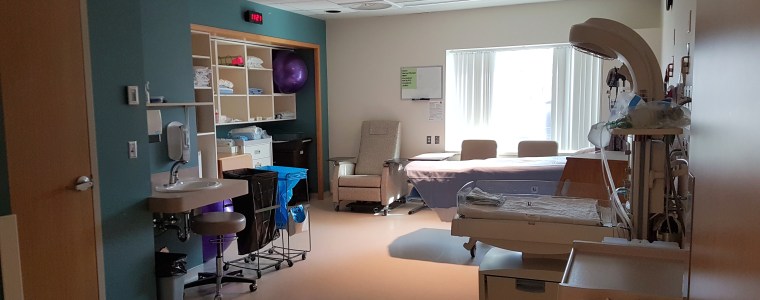
One of the important tasks I do for my clients is to set up their hospital birth room for comfort, safety and efficiency.  Here’s a list of what I take care of I go into a birth room.  In my local hospital the birth rooms all have a small closet, mini-fridge, blanket-warmer, some empty shelves and an adjoining private washroom with a tub. If you’re DIYing then find out ahead of time what your local birth rooms are like and modify as needed.

Home Birth Supply List

Prepare Your Home Before 37 weeks:

  1. Midwife & doula contact info entered into cell-phones.
  2. A contact page on your fridge or pinned to a wall, easy to find, in case we have to call for fast help. (Trust me – brain-freeze is a thing!)  Please print, fill out and post this Homebirth Contact Form, or add the extra info to the page your midwives provide and ask you to post.
  3. Other “Important Phone Numbers” list on your fridge.
  4. Some cleared surfaces for equipment set-up.
  5. Plan for birth-attendant parking.
  6. Outside lights working, house # visible at night (may require a temporary # to be put up).
  7. Clear a path to door and through halls in case we have to quickly run in equipment for set up or quickly depart.
  8. Child-care plan (unless they’re attending birth; MW & doulas can offer tips).
  9. Pet-care plan – pets with teeth / claws absolutely need to be locked up or sent elsewhere as even the most gentle animal can become over-protective and stressed while mama’s in labour.
  10. If you’d like candles then please use only beeswax or battery-candles. The rest are toxic and can give your support people headaches.
  11. Get your bed “birth-ready” – make bed in this order (from bare mattress): extra mattress pad, sheets for after the birth, then a plastic liner/sheet or water-proof mattress pad, a regular mattress pad if you’re using a plastic sheet (optional but nice, because plastic gets hot and sticky; an extra flannel sheet works too), “birth” sheets, blankets & pillow cases that can be used for birth.  Have pillow cases and blankets for after the birth nearby.  Note: if you don’t wish to sleep with plastic in the days/weeks before birth, please have all this ready near bed so someone can quickly make the bed during labour.
    Note: Waterproof plastic liner/sheets can be a clear shower curtain liner or plastic drop-sheet (like a thin tarp). Mattress stores sell nice waterproof mattress pads that feel like normal bedding.
  12. If you’re planning a water birth then ensure hot water temperature is turned up
  13. Birth-Kit from MW (if she provides this; otherwise purchase and assemble yourself):
    – Package of 10 or more large absorbent under-pads / “blue pads”
    – Peri-bottle for postpartum perineal care (one per washroom)
    – 4 -6 pair disposable mesh underwear
  14. If you have a guest-room, it’s nice to have it ready for birth-attendants, just in case.
  15. Extra bits if you’re planning a water birth:
    Note: I am a water birth expert and can offer all kinds of guidance if there are issues with any of this, but we need to know ahead of time!
    – Purchase / rent birth pool (unless your bath-tub is appropriate) and all related supplies.
    – Determine where and when to set up the pool.
    – Tarp to protect the floor. Padding under the tarp is nice.
    – Hot water temperature is turned up.
    – Ensure the hose for filling the birth pool fits one of your taps and reaches your pool. Seriously, you can not imagine how often this isn’t done and foils waterbirth plans! Do not just assume it all fits. If the hose won’t connect then you’ll need an adapter or extra pump; ask me.

Birth Containers

Please prepare in plastic tubs or reserved laundry baskets; boxes work in a pinch.

 1) Dryer Items
These items will be warmed in the dryer prior to birth.  Place in a separate bag or container, stored near dryer or with Birth Container). Washed and ready for use; will get soiled or stained so consider Thrift Store purchases.

  • 6 towels (make it 8-10 for waterbirth!)
  • 6 receiving blankets
  • 2 hats for baby
  • 3 flannel sheets/blankets for mother (4 for for waterbirth)

2) Other Linen
This is in addition to the Dryer Items above.  This linen is kept in a separate container please, near birth-space e.g. in bedroom, by birth-pool.  Washed and ready for use; will get soiled or stained so consider Thrift Store purchases.

  • Newborn outfit incl. diaper, undershirt, sleeper, socks, hat and blankets
  • Nighty / PJs for mother
  • Set of sheets to fit bed
  • 1-2 flannel sheets/light blankets for waterbirth
  • 6 old washcloths, old diapers, etc. for hot compresses
  • 10 washcloths for mother comfort
  • 6 towels; make it 12 minimum for waterbirth!
  • 10 cloths/rags for clean-up after

3) Other Items
Keep this in a container close to or in birth-space.
Note: There may be some repeats from the Birth Bag Suggestions list, which you’re encouraged to check out for some great ideas of things you can use at home, hospital or birth centre.

  • Large plastic sheet to protect bedding – e.g. drop sheet or plastic shower curtain liner (see above for how to prepare your bed for birth)
  • 4 large, strong garbage bags (2 for garbage, plus replacements)
  • Large laundry bin or an additional large strong garbage bag to collect soiled linens
  • 1 large roll paper towel (please – no matter how much you love Mother Earth
  • Plastic ice cream pail or other suitable container with lid for placenta
  • Flashlight with new batteries
  • Large pkg. maxi pads, extra long (the bigger, thicker the pad the better). Avoid pads with a “dry-weave” topping as they can be irritating to your perineum
  • Small bottle of peroxide – best thing ever to clean blood from surfaces and fabrics
  • Flexible straws
  • Cookie sheet or other large firm portable surface
  • Bottle of hydrogen peroxide (cleans blood stains)
  • Digital thermometer
  • Q-tips, in case of care of umbilical cord
  • (optional) Small unopened bottle of food-grade oil e.g. coconut for crowning
  • (optional) Large saucepan or Crockpot for heating compresses and oils

4) Waterbirth
Your pool should have come with a supply list.  Please ask if you need more info.  If you’re lucky enough to have a big comfy built-in tub, the only extra thing you’ll need is a floating thermometer and a small fish-net or sieve.

Nourishment

Think about lots of healthy foods and drinks (Labour-Drinks) you and your family might enjoy during and after labour and birth, and stock up.  HINT– birth attendants LOVE tea and snacks too! 😉

Make a few trays of ice-cubes (can keep cubes in a zip-lock).

Cytotec Induction Dangers: What if Viagra Made Penises Explode?

(There is a connection – stay with me here!)

Cytotec (misoprostol) is a drug for stomach ulcers.  However, it is used “off-label” in the USA, (and has recently been approved in Canada too) to induce labour, per obstetrical guidelines.  It’s not approved by the FDA for such use.  In fact the manufacturer issued a written warning against use of Cytotec for labour induction as it can cause hyper-contraction of the uterus, which can lead to uterine rupture, which can obviously lead to death.

So, when Cytotec is used as directed by the ACOG (American Congress of Obstetricians and Gynecologists), a well documented, possible side effect is uterine rupture.

Ina May Gaskin started a quilt project in which each square represents a woman who died in childbirth.  Many of these squares are dedicated to women who received Cytotec induction.

This issue was raised by some classmates today.  Many good points were made; the most obvious being, why are Cytotec inductions allowed, despite ample evidence to show it’s a dangerous practice.  It was suggested that this demonstrates the extent of disregard for women and their bodies.  My friend and classmate, Kelly Graham, a passionate advocate for women’s health, speculated, “I wonder how many (of these same) doctors would prescribe Viagra if a side effect was penis explosion.”  Or – another analogy – would we use a drug to help asthma if a possible side effect was ruptured lungs?

Enough said.

Want to explore further?