Being Weighed in Pregnancy

Weight gain is one method to measure pregnancy health. It’s not the only way. Like everything else, being weighed is optional. You can set boundaries around being weighed or decline altogether.  

For many women, weigh-ins are a source of anxiety, regardless of their size. Society is filled with preconceived ideas about weight and a lot of people have past trauma or shame related to the number on the scale. That can stem from negative body image issues, being stigmatized due to weight, a history of disordered eating or body dysmorphia. For vulnerable people, the act of being weighed and hearing the number can significantly set back their recovery or treatment. 

I recommend speaking with your medical care provider about being weighed and employing shared decision making. Ask if it’s a routine part of care or if there’s a specific medical reason. If the “medical reason” is pregnancy, you could ask for more specific reasons. Use that information to decide if you agree to do weigh-ins at every appointment, do them differently than the usual, or skip them.  

Here are some tips for navigating weigh-ins:

  1. Share Concerns: Talk to your medical care provider about any anxieties or discomfort you may have regarding weighing. Ask questions and decide what’s best for you. 
  1. Say No Thank You: Remember, being weighed is always optional, including during pregnancy. It’s okay to decline if you’re not comfortable.
  1. Less Frequent Weigh-Ins: If frequent weigh-ins are causing stress, discuss a modified schedule of being weighed less frequently than at each appointment.
  1. Learn Total Weight Gained Only: For some people, it’s the total number that concerns them more than their pregnancy related change in weight. Request to learn the total amount of weight gained and not be told your current weight. 
  1. Do It at Home: If you prefer, you can weigh yourself at home and report the results at your prenatal appointments.
  1. Stand on Scale Backwards: If seeing the number causes stress, ask to face away from the display during the weigh-in. Be clear that you do not want to be told the number. (You may also ask for the weight to be blocked out on your copy of your prenatal records, if you are worried about accidentally or intentionally seeing it.)
  1. Tell Staff to Not Say It Out Loud: This prevents you and others from learning your weight, and maintains your privacy.
  1. Ask for Privacy: If the scale is in a public area, request to be weighed in a private space if that makes you more comfortable. You can also incorporate any of the above strategies. (Yes, one of my clients just told me her doctor’s office has the scale in the waiting room!)
  1. Change medical care providers: Hopefully you can come to an agreement that feels good to you. If you are not treated respectfully, then changing to another medical practice is usually an option. 

Your health journey is personal and deserves individualized support. This is one of many choices you can make through your pregnancy journey. Although such conversations can be difficult, it’s important to advocate for your comfort and well-being every step of the way. 

Birth Trauma – Practical Tips for Preventing Trauma and Giving Birth After Trauma

There is a relationship between birth and trauma. Some people are traumatized through their birth experience while others begin the birth process in a traumatized state. Past trauma can have a significant impact in the birth room, including presenting additional challenges and the possibility of being retraumatized. This article presents practical tips for being more empowered and minimizing trauma during pregnancy and birth. 

Before we go further, I would like to acknowledge there are many obstetrical care workers who treat their patients respectfully and kindly while doing the important work of providing medical care. They are aware of the vulnerability of birthing families and treat them in a way that leaves them feeling safe, happy and whole. However, that is not the case everywhere or with everyone; there’s still work to do.

For most people birth in and of itself is not traumatic. In most cases, trauma stems from how they were treated through their birth. There are too many birth stories that include coercion, disrespect, disempowerment, fears that aren’t addressed, being left alone, feeling unsafe and unsupported, and lack of choices. Birthing people don’t know what their options are and therefore they have none. They don’t know how to prepare and what to do. They are told what’s going to be done to them rather than being part of the decision making process. Many women report feeling like they were stuck on a runaway train.

Women need to feel safe while giving birth. In fact, birth is shorter, more comfortable, and usually uncomplicated when that’s the case. There are things we can do to decrease or negate the impact of some common practices in the North American medical model of birth that may lead to feelings of vulnerability or trauma. In many cases it’s just how things are done and set-up. 

Globally, 1 in 3 women have been subjected to physical and/or sexual violence. Every birthing person should be treated as a survivor but that is not the case yet. Fortunately in some hospitals, including ours, staff have special training in this area and provide extra respectful, sensitive and compassionate care to survivors.

Practises that may add to trauma in some people include…

  • Being exposed, naked, uncovered in front of others.
  • People who are fully clothed (and highly educated or seemingly “in charge”) standing over someone who is partially or wholly undressed, usually on their back, and possibly with their legs open, in a vulnerable state.
  • Being touched, especially from behind, without consent or even being told first. 
  • Language such as “good girl” and “honey” and “dear”.
  • Cervical checks in general. Exasperated by being told, “I’m going to check your cervix now,” without a conversion to explain reasons, options, and waiting for consent. Painful cervical checks. Staff not stopping when being told “No!” or “Stop!” or any of the many other ways women say no or stop. 
  • Being put into positions, often presented as, “You have to…”. Lack of choice.
  • Not being “allowed” to move freely.
  • Legs being held or put into leg rests / stirrups
  • “Put on this gown.” Being told what to wear, especially when that garment does not offer full coverage and is open in the back.
  • A room set up that results in “private parts” facing the door.
  • Technical language used in medical settings can be confusing and scary for some people.
  • Epidurals and the numbness that may result.
  • Not having timely access to pain medications, including epidurals.
  • Language related to failure or “not doing it right”, e.g. lack of progress, making too much noise, breathing wrong, being too stiff, reacting too much to pain, stop crying.
  • Lack of choice in birthplace and/or medical care provider.

Things you can consider doing to feel more in control, more empowered, and lessen the chances of being traumatized:

  • Expect excellent and compassionate care but be prepared in case not everyone you meet feels that way to you.
  • Remember you have the same rights in the birth room as you do in the coffee shop or anywhere else! No one is allowed to touch you or do anything without your consent. You have the right to say “yes”, “no”, “wait”, “stop” to any test and intervention. 
  • Be an active participant in your care. Consider your care providers as part of your team. 
  • Ask enough questions to make informed choices.
  • Pause. Normally things don’t have to happen right away. Ask your questions, gather your wits, get grounded and then proceed.  
  • Bring a companion who can help you find your voice and help advocate for you. Doulas play an important role in this. 
  • Ask for a few minutes alone or with your support person(s) before making decisions. You might regroup, realize you have more questions, find the strength or means to say no to something you don’t want, or yes to something you don’t want but feels like the best choice. 
  • Maintain control over cervical checks and other procedures that might feel invasive. Don’t proceed until the care provider has an understanding of how to help you feel as safe as possible.  
  • Share that you are coming into this experience with past trauma. No need to share details.
  • Hire a doula who is trauma-informed.
  • Say no. Use the word consent.
  • Wear clothing that feels safe and offers the level of modesty you need.
  • If you want touch comfort measures and also modesty, massage and touch can be done over a sheet or your clothing.
  • Consider how you might react to the intense sensations of birthing – pressure as the baby descends, pain and/or power of contractions, your body stretching. 
  • Tools to deal with the aforementioned sensations – meditation, hypnobirthing, comfort measures, pain medications including epidurals. Some people opt for cesarean. Discuss these options with your midwife/doctor if you are concerned. Your mental and emotional health are just as important as your obstetrical health.
  • Think about how it might feel to have an epidural that might cause legs to feel heavy or numbed. This can be a welcome relief or it might be frightening.
  • If you have a counselor or psychiatrist, have a meeting to help you prepare for birth and postpartum.
  • If it’s not possible to be covered or positioned in a way that offers privacy from the door, then a companion can hold up a sheet or stand between you and the door, acting like a visual block as people enter & exit the room.
  • Wear headphones.
  • Wear a sheet or blanket like a fort or super-hero cape.
  • All the other things that bring comfort and security during birth.
  • Stick a sign on the door if there’s a single point you wish everyone to know. It might be, “Please read my birth plan before meeting me.”
  • Consider warm compresses on the perineum during crowning if you’re on your back. This can offer warm comfort and a greater sense of privacy. On the other hand, some people would find this scary and like too much touch. 
  • Assume birthing positions other than being on your back, such as being upright, leaning forward, and hands & knees.  
  • If you normally wear glasses, consider the impact of leaving them on or off through labour. Seeing more or less detail may be helpful.

Things You Can Put on Your Birth Plan

You can create a nice Birth Preferences Document that builds bridges of communication and understanding with your medical care team. If you are a survivor or are vulnerable, then you may wish to include additional points related to trauma, which are listed below. It can be helpful to the staff if your document includes, “Due to past trauma, …..”.  You don’t have to disclose and won’t be asked to explain what that trauma was. 

  • Wait for verbal consent before touching me in any way.
  • I need to have complete control over cervical checks, including when they’re done, by whom, and the pace. I may say “yes”, “no”, “wait”, and “stop”
  • Please assume I have not consented to anything until I expressly say yes. 
  • Before we discuss options, procedures and next steps, ensure I… (options include: am fully clothed or covered, am sitting, am standing, have my partner/companion/doula nearby. Use any or all of those things in any combination). 
  • If I’m on the bed I will face the foot of the bed until the moment of birth. 
  • I will need a few minutes (alone?) to process information before making choices.
  • Please limit the team to essential staff only. No observers or students practicing on me.
  • Minimal cervical checks and only by experienced staff who will proceed only after obtaining my expressed verbal consent. 
  • Please use my name when addressing me; no terms of endearment such as honey or good-girl.
  • Please ensure I am covered as much as possible throughout my birth.
  • I would like warm compresses during crowning.
  • Hands off my bottom during crowning.
  • I would like to hear the baby heart monitor if it is being used.
  • Please silence the baby heart monitor if it is being used.

Preparing for your birth can include…

  • Getting as prepared as possible before giving birth. Learn about local practises and your options. Knowledge is power! My prenatal classes are designed with this in mind.
  • Work with a midwife or doctor with whom you feel safe and comfortable.
  • Hiring a doula. Most communities have a professional association with bios for a variety of doulas.
  • Practising saying no to things you don’t want and yes to those you want. Ask for what you want.
  • Taking steps to learn your options – prenatal classes, appointments with your medical care provider, counsellors, local birth-workers – and prepare a plan for your specific concerns.
  • Practising the things you might want to do in labour, such as a variety of positions, comfort measures, grounding practises, moving freely in clothing you wish to wear in birth.
  • A hospital tour. The fewer surprises the better.
  • Pack a birth bag that includes choices of clothing, things you can use for comfort, and even a couple of things that bring you peace.
  • Asking lots of questions along the way. Practise having discussions with your team in order to have shared decision making. When you say “no” that should be respected and when you say “yes” you’ll feel better about your decision. You will likely be pleasantly surprised.

Summer pregnancies & hot births!!

Oh, the days are hot and even more so when we’re growing a baby or holding a newborn. If you don’t already know, profuse sweating is a normal part of postpartum recovery even during winter. 

Here are some tips for summer survival with a baby-bump that go beyond the obvious, typical lists – wear loose clothing, do things early in the day, stay hydrated, find AC. I think we all know that by now.  

Summer Pregnancy-Safe Drinks

Growing and/or feeding a baby both take a lot of energy and we burn through more electrolytes and minerals in the hot summer. Sugar drinks are not helpful. Pregnant and breastfeeding bodies are more susceptible to blood sugar shifts and the yeast / thrush infections that result from high sugar intake. I have 2 articles for you for healthy, refreshing and cooling drinks (other than plain old water which is of course, important every day). They’re all nutritive during pregnancy and postpartum recovery – actually any time. Kids and adults can consume these. 

Cooling Essential Oil Body Sprays / Mists

Even though every bottle says “don’t use during pregnancy”, there are a lot of oils that are safe. Consult a certified aromatherapist – that’s me, from way before it was cool (pun intended) to be into essential oils. You can make a spritzer with:

  • mint
  • lavender
  • cucumber
  • lemon – actually any citrus oil.

Add any combination of those to aloe, witch-hazel or a flower water such as rosewater.

If you prefer to buy a spray, check out the perineum sprays such as that made by Earth Mama Organics. They can be used all over, not just your bottom! 

Caution #1: Citrus oils can make your skin more sensitive to sun-burn; only use for an indoor spray.
Caution #2: Many commercial refreshers and cooling sprays contain Eucalyptus, which should never be used near babies and pets. Best to avoid it through pregnancy too. Some types are safe but the most commonly used ones are too strong. 

Angie’s Tips for a Cooler Birth:

  • Put a small wireless fan in your birth bag and/or birth place. Some of my clients use handheld fans and others use ones with a big clip. 
  • If you’re having a hospital birth, i.e. in a scent-free environment, then bring an empty squirt bottle and fill it with cold water for misting. 
  • Ice chips! They’re amazing during labour & birth. Suck on them, put them in a washcloth and use as a cold-pack all over the body, put them in a bowl of water and dip a washcloth in to apply on foreheads and necks, add them to juice and water. I rarely attend a birth without using at least a couple of cups of ice-chips. 
  • Temperature fluctuations are amplified during the birth process. This video has tips to regulate temperature during birth and what the partner / birth companions can do.  

5 Ways Labour Pain is Different than Broken-Bone Pain

Some people compare labour pain to that of breaking bones. Besides scaring pregnant people, that’s not an accurate comparison. On the other hand, some women share stories of pain-free birth. Here are 5 ways the sensations felt in labour are different than “broken-bone pain”.

  1. Broken-bone pain is unrelenting and doesn’t go away without strong pain meds; labour pain comes and goes in a rhythmical manner. In fact, throughout labour, much more time is spent in the rest between contractions. Even in advanced labour, most contractions last between 60-75 seconds but can sometimes get to 90 seconds. Then there’s a rest before the next once. In active labour that rest will generally be between 1-3 minutes. In earlier labour that rest will be up to 10 minutes. There is no rest with broken-bone pain. It’s constant.
  2. Broken-bone pain is all encompassing, resulting in the release of stress hormones and injury responses in our body. Labour pain is accompanied by powerful pain-killing hormones such as endorphins. The female body is equipped for labour with strong, naturally occurring hormones that are released as labour progresses. The effect of these hormones has been compared to morphine by physiologists. (However those hormones are not as concentrated and isolated like morphine. Still, that’s a powerful comparison!) Stress makes pain worse.
  3. Broken bones are a terrible injury; labour is a normal human process.
  4. Broken bones are due to an accident; labour is a known and sometimes planned event. Therefore we can prepare for the intensity of labour. There are many helpful tools and strategies for comfort measures that can be done by the labouring person or their birth companions. We teach many of these in our How to Ease Labour Pain Class.
  5. Doulas! Birth doulas can make a significant difference in how labour is experienced and felt. There’s ample research showing the benefits of doula support through birth, including shorter labours, half the rate of Caesareans, significantly fewer requests for epidurals. To my knowledge, there’s no such thing as “broken-bone doulas”. Everyone around someone with broken bones is providing medical care – good thing too. Ideally, labouring people will have someone knowledgeable with them whose only job is to provide comfort and support.
  6. Broken bone pain is measured in weeks and months; labour is measured in hours.

* It’s interesting to note that I’ve only heard men make this comparison. Many pregnant women fear this will be the case but I’ve never heard anyone who’s gone through labour and had a past experience of broken bones say they were the same thing. I’m one of them. A couple of years before being pregnant, I broke my pelvis. There is absolutely no comparison between the two events.

Infant Colic – What Can You Do?

Colic can make the new parenting journey grueling!  What can parents and care-providers do?

Babies are said to have colic if they cry for more than 3 hours daily on a regular basis. The cry is often high-pitched and relentless, accompanied by a red face and rigid body. It often happens later in the day or evening. Nothing seems to soothe the baby. Research shows 10-20% of babies experience colic. It’s heart-wrenching and exhausting for care-providers. 

There are theories about what causes colic but no certain answers. Colic resolves in most infants by 3-4 months, which is the entire “4th trimester”, when we expect babies to sleep a lot and when new families are typically bonding and getting to know each other.

The first thing to consider is your baby’s health. Is your baby gaining weight and soiling diapers as expected? Check out the handy Best Start Chart for signs that feeding is going well. Watch for signs of illness that require medical attention, such as lethargy (limp baby), fever, diarrhea, forceful vomiting.   

Is there a chance your baby is overstimulated? Some babies get overwhelmed by a seemingly low level of sounds, sights, and attention. Others can’t get enough. 

If your baby is fed, dry, healthy and the usual soothing techniques (rocking, walking, warmth, fresh air, holding, breastfeeding, singing etc) don’t help, then suspect colic. Here are some suggestions that can help an otherwise healthy baby who has colic. 

  • Infant Chiropractic care, from a Chiropractor who has specialized training and experience. Over 90% of colicky babies show improvement! It’s gentle and nothing like adult adjustments. I’ve heard countless stories from clients who’ve seen amazing results after only one or two treatments from their local baby-chiro.
  • Consult with a Lactation Consultant. Suggestions to help with latch and positioning can make a big difference, especially if the colic is related to swallowing gas while feeding. LCs spot all kinds of little or big things that can be easily corrected. 
  • Infant massage. There are classes and videos demonstrating how to do infant massage for colic. This can help move gas along, colic or not.  
  • Homeopathic remedies such as Cocyntal. I used to run the Vitamin & Supplement department of a busy health store and this was one product I could never run out of for fear of the pleas from desperate new parents. Many of our customers swore by this remedy. 
  • Fennel tea is a natural remedy for digestive issues such as gas, cramps, flatulence. It helps with colic too. Ready-to-use fennel tea is sold commercially; just add boiling water and steep for 5-10 minutes like any other tea. It can also be made by boiling fennel seeds (5ml seeds per 250ml water; 1 tsp per cup) for 10-minutes in a covered pot. The breastfeeding parent can drink 3 cups daily. For babies being formula fed, cooled fennel tea can be given to the baby orally with a dropper, 3-5ml (½ – 1 tsp) three times daily.
  • Break the stress cycle, if there is one. Never punish or shake a baby who won’t stop crying. Take 10. While it might go against your instincts, it’s better to put your baby down in a safe place and step away for 5-10 minutes to breathe slowly and deeply and regroup. Colic is one of the hardest parenting issues! 

I worked with one family who tried everything to no avail. Both parents were loving and kind but exhausted, distressed, anxious and at the end of their rope. Finally, in desperation, they asked a relative to come and stay for 2 nights so they could go sleep at a hotel. They figured they could go home to care for their screaming infant again once they’d restored some energy. When they went back home the colic was over. Done. Never came back. Coincidence or an environment of stress responses cleared up? We’ll never know but they sure were relieved. This is an extreme example but sometimes we have to ask for help and try something we’ve never done.

Angie The Doula – New Parent and Baby Essentials

What are the most important items for new parents and their newborns? Everyone has different opinions about this. Stores and ads would have us buy all kinds of things. What do you really need? Think about what you have to do with your baby. For example, a travelling family will have different needs than a family at home.

This New Parent and Baby Essentials list is from my experience along with comments from families with whom I’ve worked.  It’s biased toward being kind to the environment and keeping life simple.

Before we get started, I want to let you know that really all you need (other than love, food, shelter) is a warm safe place for your baby to sleep when they’re not in your arms, diapers (unless you’re doing EC) and a system for cleaning your baby, and a safe and comfortable way to transport them.  Note that babies will go from laying stationary to rolling over in the blink of an eye.  Save your babe from a fall and potential injury by never leaving them unattended on a flat surface such as a bed or table, unless they’re surrounded by little rails or something that will both prevent rolling and suffocation.

New Parent and Baby Essentials

Essentials:

  • For maternal postpartum recovery and wellness:
    • Bottom spray (postpartum perineum-saver!!)
    • Adult diapers for the first week – not pretty but awesome way to prevent postpartum leaks
    • See Breastfeeding section below
  • Something to wear or a way to hold the baby – sling, wrap, carrier or baby pack for newborn i.e. supports head
    • May need a couple of methods to accommodate different adults – sizes, abilities, preferences – and babies
  • For baby:
    • See Diaper section below
    • Car seat
    • Baby blanket or cover for car seat
    • Receiving blankets – 20
    • Mini-wash cloths can be used as wipes – 40-50 if you’re not using disposable wipes
    • Baby blanket for home
    • Digital thermometer
    • Q-tips, in case of care of umbilical cord
    • Baby nail clippers 
    • Saline-squirter or nose-sucker
    • Baby clothes – many people get much more than they need from family & friends
      • A few outfits including sleepers and undershirts
      • Socks & mitts
      • Outdoor clothing
      • For winter babes, outer clothing such as a fleece bunting-bag or something that covers hands and feet as part of the outfit.  Also a good hat that stays on.
      • For summer babes, a sun-hat, and thin clothing to cover up skin but not overheat
    • Baby ear-muffs (hearing protection), e.g. for music festivals, movie theatres
New Parent and Baby Essentials
  • For breastfeeding/chestfeeding:
    • Nipple cream or pharmaceutical grade lanolin (e.g. Lansinoh)
    • Nursing bras
    • Nursing pads (pref cotton, non-disposable)
    • For consideration: a little manual pump or milk collector device such as the Haakaa
    • Book: Womanly Art of Breastfeeding – quick answers for breastfeeding issues; easy to read and short fix-it suggestions
  • Diapering.  Set up a safe place and have supplies ready to use.
    • Change table with little rails, change pad (with sides) on a table or dresser, or towel on the floor
    • Diapers – what kind will you use?  Cloth or disposable (biodegradable, organic, or regular)
    • Wipes – washcloths / reusable, or disposable
    • If using cloth, you’ll need a storing, soaking and washing method.  Feel free to ask me.
  • Think about sleeping options:

CPS recommends baby sleeps in the same room as parents , ideally for the entire first year, but for a minimum of 6 months.

  • Baby blanket or quilt; no pillows needed
  • Some kind of washable pad for under baby – can be anything from a proper baby-pad to a folded sheet.  This goes under the baby-sheet to avoid scrunching and twisted bedding.
  • Family bed – a futon on floor, extra-wide bed against the wall, or 3 sided crib that attaches or goes against parents’ bed
  • Family room – a safe place for baby to sleep in your room but not necessarily attached to bed
  • Baby room – high quality crib with slats close enough so a pop-can won’t fit through 
  • In a pinch – box, drawer or laundry basket
New Parent and Baby Essentials

Other things that make life easier (and are worth every cent!)…

  • Really great nursing pillow 
  • Smart Medicine for Healthier Kids book has both allopathic and holistic advice on childcare from newborn to teens
  • Calms book – a short read with great tips for learning to communicate with your new baby
  • Medicine dropper – has many uses other than medicine
  • Stroller, or Burley/Chariot 
  • High quality and “clean” baby care soap and laundry soap

Nice to have but not essential

  • Swing or Rocker
  • Baby-bath or Tummy Tub but another option is to just have a bath with your babe to minimize buying stuff.
  • Baby monitor, depending on your lifestyle and home layout.
  • Breast pump and glass bottles in case of emergency or depending on lifestyle.
  • Playpen  

I teach a variety of Child Birth Education classes and prenatal workshops online for people all over.  I have been a birth doula since 2002, and have helped over 300 clients with their births and over 1000 through prenatal classes. Learn more about my birth doula services, and contact me with any questions you may have.

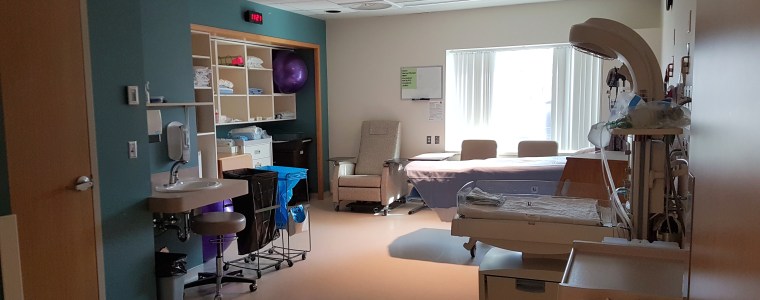
Hospital Birth Room Set-up 101

One of the important tasks I do for my clients is to set up their hospital birth room for comfort, safety and efficiency.  Here’s a list of what I take care of I go into a birth room.  In my local hospital the birth rooms all have a small closet, mini-fridge, blanket-warmer, some empty shelves and an adjoining private washroom with a tub. If you’re DIYing then find out ahead of time what your local birth rooms are like and modify as needed.