What Partners Can do at Birth

One of the most common things I hear from partners who consult with me after their first birth is, “I felt so useless.” Most partners or parents to be want to be helpful in labour but feel unsure of what to do. Read on for some good tips.

Read more: What Partners Can do at Birth

Be present

  • Never underestimate the importance of just being close and present, even if you don’t know what else to do.
  • Breathe. 
  • Pay attention to your partner’s immediate needs and wishes, which may change as labour progresses. She may want you to be close or give her space, touch her or not, offer encouragement or silent support.

Speak up!

  • Push the pause button and ask questions if interventions come up. 
  • Ask for time to make decisions. 
  • If the laboring woman wants something changed , then say so. e.g. If the nurse is doing cheerleading / coached pushing when your partner wants quiet support instead. 
  • Prompt staff of birth wishes. e.g. Just before the baby’s born, remind them how long to do delayed cord clamping if that’s part of your birth plan.
  • Remind staff of birth preferences if it seems they haven’t read the birth plan.

Reminder of strength, plan, options

It’s normal for people in labor to feel like they can’t do it or they can’t go on. Remind your partner they are strong and well prepared. 

  • Phrases such as “I love you”, “you are beautiful”, and “you are strong” can bring strength. 
  • If things start to stray from the birth plan then it’s okay to talk about that with your partner and or the staff. 
  • Have conversations as a group to learn what your options are.

Physical support

  • Help with lifting and moving into different birthing positions, walking to the washroom.
  • Walk together while your partner is pacing.
  • Stay close while she’s sitting on the birth ball and make sure it doesn’t roll away when she stands up. 
  • Offer water or electrolytes or snacks. 
  • Take care of your own bio needs along the way so you can be a strong support.

Trust

  • Before you’re in labor together, learn what you need to learn to trust the birthing process.
  • Trust your partner when they ask for something; trust their body will know what to do. 
  • Have conversations with your care providers to build trust with them as well. 

Understand

  • Laboring women are not meant to be in their thinking brain.
  • You will be more likely to advocate if you understand why birth preferences are important. 
  • Understand your options and how to make decisions.
  • Before labour starts, learn things like timing contractions, when to go to birthplace or call midwives.

Comfort measures & tools

  • Learn how to do comfort measures well before labor begins. This includes things like touch, massage, hip squeezes, running the bath, hooking up the TENS machine. 
  • You’ll need to know several tricks and tools because needs change at different stages of labor.
  • Consider working with a doula. Research shows couples with a doula in their birth room share significantly more touch and eye contact!

My prenatal classes include many more tips for what partners can do to support themselves and their laboring partner through birth. We also cover things couples can do and discuss prenatally so they’ll be well equipped during labour and birth, through the first 8 weeks postpartum.

Hospital Birth Room Set-up 101

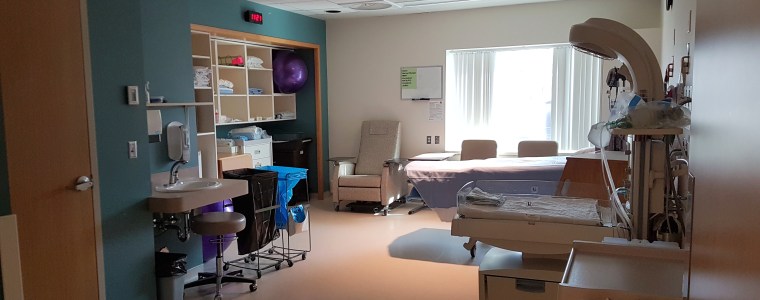
One of the important tasks I do for my clients is to set up their hospital birth room for comfort, safety and efficiency. In my local hospital the birth rooms all have a small closet, mini-fridge, blanket-warmer, some empty shelves and an adjoining private washroom with a tub. If you’re DIYing then find out ahead of time what your local birth rooms are like and modify as needed. Here’s a list to guide you through setting up your hospital room.

Summer pregnancies & hot births!!

Oh, the days are hot and even more so when we’re growing a baby or holding a newborn. If you don’t already know, profuse sweating is a normal part of postpartum recovery even during winter. 

Here are some tips for summer survival with a baby-bump that go beyond the obvious, typical lists – wear loose clothing, do things early in the day, stay hydrated, find AC. I think we all know that by now.  

Summer Pregnancy-Safe Drinks

Growing and/or feeding a baby both take a lot of energy and we burn through more electrolytes and minerals in the hot summer. Sugar drinks are not helpful. Pregnant and breastfeeding bodies are more susceptible to blood sugar shifts and the yeast / thrush infections that result from high sugar intake. I have 2 articles for you for healthy, refreshing and cooling drinks (other than plain old water which is of course, important every day). They’re all nutritive during pregnancy and postpartum recovery – actually any time. Kids and adults can consume these. 

Cooling Essential Oil Body Sprays / Mists

Even though every bottle says “don’t use during pregnancy”, there are a lot of oils that are safe. Consult a certified aromatherapist – that’s me, from way before it was cool (pun intended) to be into essential oils. You can make a spritzer with:

  • mint
  • lavender
  • cucumber
  • lemon – actually any citrus oil.

Add any combination of those to aloe, witch-hazel or a flower water such as rosewater.

If you prefer to buy a spray, check out the perineum sprays such as that made by Earth Mama Organics. They can be used all over, not just your bottom! 

Caution #1: Citrus oils can make your skin more sensitive to sun-burn; only use for an indoor spray.
Caution #2: Many commercial refreshers and cooling sprays contain Eucalyptus, which should never be used near babies and pets. Best to avoid it through pregnancy too. Some types are safe but the most commonly used ones are too strong. 

Angie’s Tips for a Cooler Birth:

  • Put a small wireless fan in your birth bag and/or birth place. Some of my clients use handheld fans and others use ones with a big clip. 
  • If you’re having a hospital birth, i.e. in a scent-free environment, then bring an empty squirt bottle and fill it with cold water for misting. 
  • Ice chips! They’re amazing during labour & birth. Suck on them, put them in a washcloth and use as a cold-pack all over the body, put them in a bowl of water and dip a washcloth in to apply on foreheads and necks, add them to juice and water. I rarely attend a birth without using at least a couple of cups of ice-chips. 
  • Temperature fluctuations are amplified during the birth process. This video has tips to regulate temperature during birth and what the partner / birth companions can do.  

5 Ways Labour Pain is Different than Broken-Bone Pain

Some people compare labour pain to that of breaking bones. Besides scaring pregnant people, that’s not an accurate comparison. On the other hand, some women share stories of pain-free birth. Here are 5 ways the sensations felt in labour are different than “broken-bone pain”.

  1. Broken-bone pain is unrelenting and doesn’t go away without strong pain meds; labour pain comes and goes in a rhythmical manner. In fact, throughout labour, much more time is spent in the rest between contractions. Even in advanced labour, most contractions last between 60-75 seconds but can sometimes get to 90 seconds. Then there’s a rest before the next once. In active labour that rest will generally be between 1-3 minutes. In earlier labour that rest will be up to 10 minutes. There is no rest with broken-bone pain. It’s constant.
  2. Broken-bone pain is all encompassing, resulting in the release of stress hormones and injury responses in our body. Labour pain is accompanied by powerful pain-killing hormones such as endorphins. The female body is equipped for labour with strong, naturally occurring hormones that are released as labour progresses. The effect of these hormones has been compared to morphine by physiologists. (However those hormones are not as concentrated and isolated like morphine. Still, that’s a powerful comparison!) Stress makes pain worse.
  3. Broken bones are a terrible injury; labour is a normal human process.
  4. Broken bones are due to an accident; labour is a known and sometimes planned event. Therefore we can prepare for the intensity of labour. There are many helpful tools and strategies for comfort measures that can be done by the labouring person or their birth companions. We teach many of these in our How to Ease Labour Pain Class.
  5. Doulas! Birth doulas can make a significant difference in how labour is experienced and felt. There’s ample research showing the benefits of doula support through birth, including shorter labours, half the rate of Caesareans, significantly fewer requests for epidurals. To my knowledge, there’s no such thing as “broken-bone doulas”. Everyone around someone with broken bones is providing medical care – good thing too. Ideally, labouring people will have someone knowledgeable with them whose only job is to provide comfort and support.
  6. Broken bone pain is measured in weeks and months; labour is measured in hours.

* It’s interesting to note that I’ve only heard men make this comparison. Many pregnant women fear this will be the case but I’ve never heard anyone who’s gone through labour and had a past experience of broken bones say they were the same thing. I’m one of them. A couple of years before being pregnant, I broke my pelvis. There is absolutely no comparison between the two events.

How to Avoid Birthing on Your Back

Did you know you don’t have to lay on your back to give birth?

Even though almost no one says, “I want to lay on my back to give birth”, that’s how the majority of women in North America – probably other places too – do it. Why? Because even if they’re in a more comfortable position, they’re told, “OK it’s time to have your baby – get on your back.” 

I’ve seen many people give birth on all hands & knees, squatting, on their side or even standing. Midwives and many doctors know how to catch babies in any position. It’s just a habit for the staff to tell their patients to get on their back.

How can you avoid this uncomfortable and ineffective position?

  1. Don’t get into the position in the first place. It’s hard to get out of it once you’re there.
  2. Just say NO!!!  Or say nothing but give a good emphatic head shake.
  3. When you get bugged over and over, keep saying NO and shaking your head!!

Sounds obvious but saying NO and continuing to refuse is not that easy. Check out my video about the Tend & Befriend Stress Response that makes it so difficult to not just do what we’re told during labour.

Here are a few tips:

  1. We do the thing we’re used to when we’re in a stressful or vulnerable situation – which describes birth for many people. Practise getting on your bed on “all 4-s”. Every night, just get on your hands and knees and do a few little stretches – even 5 seconds – then lay down. It will start to feel normal to get on a bed without laying down.
  2. During labour, crawl up onto the bed and take positions that feel good for you. No one will wrestle you to your back. At least I sure hope not – if that happens, it’s assault.
  3. Ensure you have a birth companion who can advocate for you and help you find your voice and your best position.
  4. Avoid getting on your back for cervical checks when the birth is imminent, as it’s hard to get out of that position. If you know your baby is moving down well maybe there’s no need to check. Many MCP know how to check a cervix in a variety of positions.
  5. If you have an epidural and are confined to bed, there are still many positions available to you.

You don’t need to ask permission to assume positions of your choice!  However, if there’s a medical complication that requires certain interventions or positions, then it may be safest for you to give birth on your back – but those are not common.

Of course if it feels good to be on your back, then great – go for it!  It’s very uncommon but possible. In my dreamy, ideal birth world, everyone would be in the position that feels best for them.  

I’m AE, prenatal educator and doula. You can find all kinds of information about classes, pregnancy, birth and postpartum on my sites listed below.  I wish you an empowering birth. Thanks for watching.